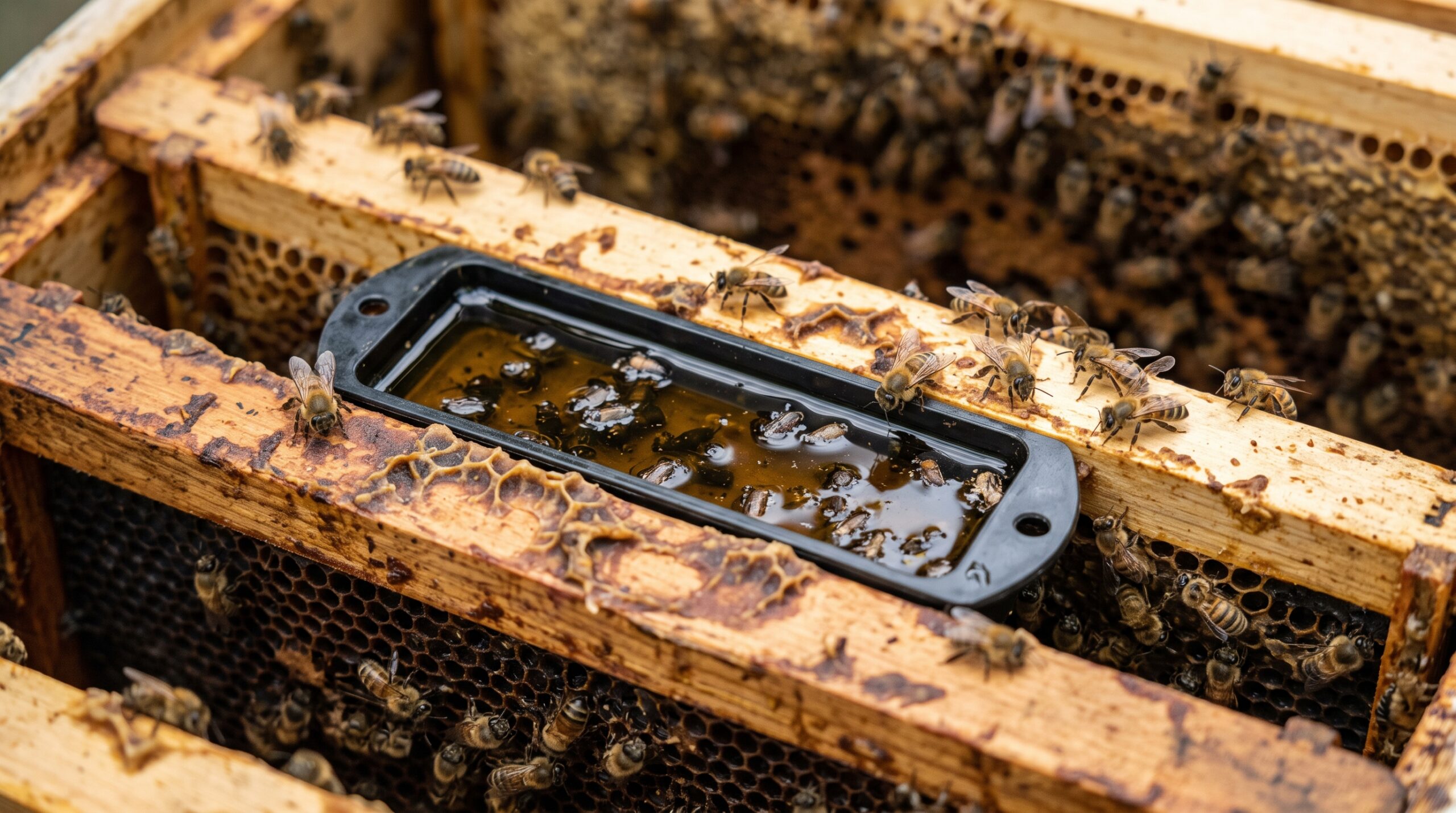
Small hive beetles arrived in the United States from sub-Saharan Africa in the late 1990s and have since spread to most of the continental US, establishing themselves as a serious pest for beekeepers in the South and expanding their range northward. In my region they’re a summer-long fight. A few beetles in a strong hive isn’t cause for alarm — bees will chase and corral them. But in a weak colony or during a dearth when the population drops, beetles can overwhelm the hive quickly, laying thousands of eggs and destroying comb, honey, and brood in days.
Understanding Aethina tumida‘s lifecycle is the foundation for controlling it. Adult beetles lay eggs in crevices and under comb. The larvae feed on honey, pollen, and brood, defecating as they go — that slippery, fermented mess in a beetle-infested hive is the larvae’s waste product. When larvae mature (in about 10–16 days), they drop to the soil outside the hive to pupate. Adults then emerge from the soil and reinfest. This soil pupation stage is both a vulnerability and a management opportunity.
In-Hive Traps: What Works and What Doesn’t
There are a dozen trap designs on the market, and my testing over several seasons has narrowed my preferences considerably.
Oil traps (West Trap, AJ’s Beetle Eater, etc.): These are plastic traps filled with vegetable or mineral oil that sit on the bottom board or between frames. Beetles fall or are chased into the oil and drown. They work consistently in strong hives where bees are actively harassing beetles. The main drawback: they require regular checking and refilling, especially in summer heat where oil evaporates. I run these in all my hives from April through October.
Hood trap (FreeBee trap, similar designs): A corrugated plastic insert that sits between the inner and outer cover, or between frames, baited with apple cider vinegar. Beetles enter seeking the scent and become trapped. These work reasonably well and require less maintenance than oil traps, but the bait effectiveness diminishes over time. Replace the vinegar every 2–3 weeks.
Beetle Blaster: A slot-style trap that hangs between frames and contains oil. Simple, inexpensive, and works well. This is probably the most widely used commercial trap. I keep two per hive in summer.
What doesn’t work well: Diatomaceous earth on the bottom board. I’ve tried it and found the impact minimal — bees avoid it, beetles navigate around it, and it’s a nuisance. Skip it.
Soil Treatments: Targeting the Pupal Stage
Since beetles must pupate in soil outside the hive, treating the soil in the vicinity of your hives breaks the life cycle. This is often overlooked by hobby beekeepers but makes a real difference during heavy beetle pressure.
Diatomaceous earth (soil application): Spreading food-grade DE in a 2-foot radius around each hive kills pupating beetles through desiccation. Apply after rain and reapply monthly during beetle season. Works better in sandy, well-drained soils.
GardStar (permethrin 40% WP): This is the only EPA-registered soil drench for small hive beetle pupae. Mix according to label directions and apply to the soil beneath and around the hive stand. Effective, but keep it in the soil and away from the hive entrance — permethrin is highly toxic to bees. Never apply to the hive or when bees are foraging on nearby ground-level flowers.
Beneficial nematodes (Steinernema carpocapsae): These microscopic predatory nematodes parasitize soil-dwelling insects including hive beetle pupae. Apply as a soil drench per package instructions (usually 25 million nematodes per 1,000 sq ft). They work best in moist, warm soil. A somewhat less reliable control than permethrin but non-toxic to bees, pollinators, and humans. Worth using in apiaries near water sources or vegetable gardens where permethrin isn’t appropriate.
Colony Management Strategies
The single most effective SHB control is maintaining strong colonies. Bees in robust hives physically corner beetles in propolis “jails” — encasing them in propolis so they can’t escape or reproduce. Weak colonies can’t do this. Here’s what helps:
- Keep your hive body size appropriate to your colony. A small cluster rattling around in three boxes has far more space for beetles to hide than bees can patrol. Match box count to bee population — reduce to one deep if the population is low.
- Avoid building up too much comb. Excess drawn comb stored in hive bodies attracts beetles. Store drawn comb in a freezer or use fumigation strips in a sealed storage container.
- Monitor varroa. Varroa-damaged colonies become weak colonies, which become beetle-vulnerable colonies. The chain of problems is consistent across apiaries.
- Inspect and harvest honey promptly. Uncapped frames left in the hive without enough bees to cover them are prime beetle breeding grounds. Harvest on schedule and don’t leave supers on collapsing colonies.
Quick Reference: SHB Control Options
- In-hive oil traps: Year-round in SHB regions, check weekly in summer
- Soil drench (GardStar): 2–3 applications per season, keep away from hive entrance and bloom
- Beneficial nematodes: Monthly applications in moist soils where permethrin isn’t appropriate
- Colony strength: Single most effective preventive — strong bees, right-sized equipment
- Drawn comb storage: Freeze all stored comb to kill eggs and larvae before storage
Small hive beetles are a manageable pest for beekeepers running strong colonies with consistent monitoring. The beekeepers who lose hives to SHB are almost always dealing with a colony that was already weakened for another reason. Keep your varroa counts low, keep your colonies populated, right-size your equipment, and run oil traps in high-pressure months — that combination handles most SHB problems without any special intervention.