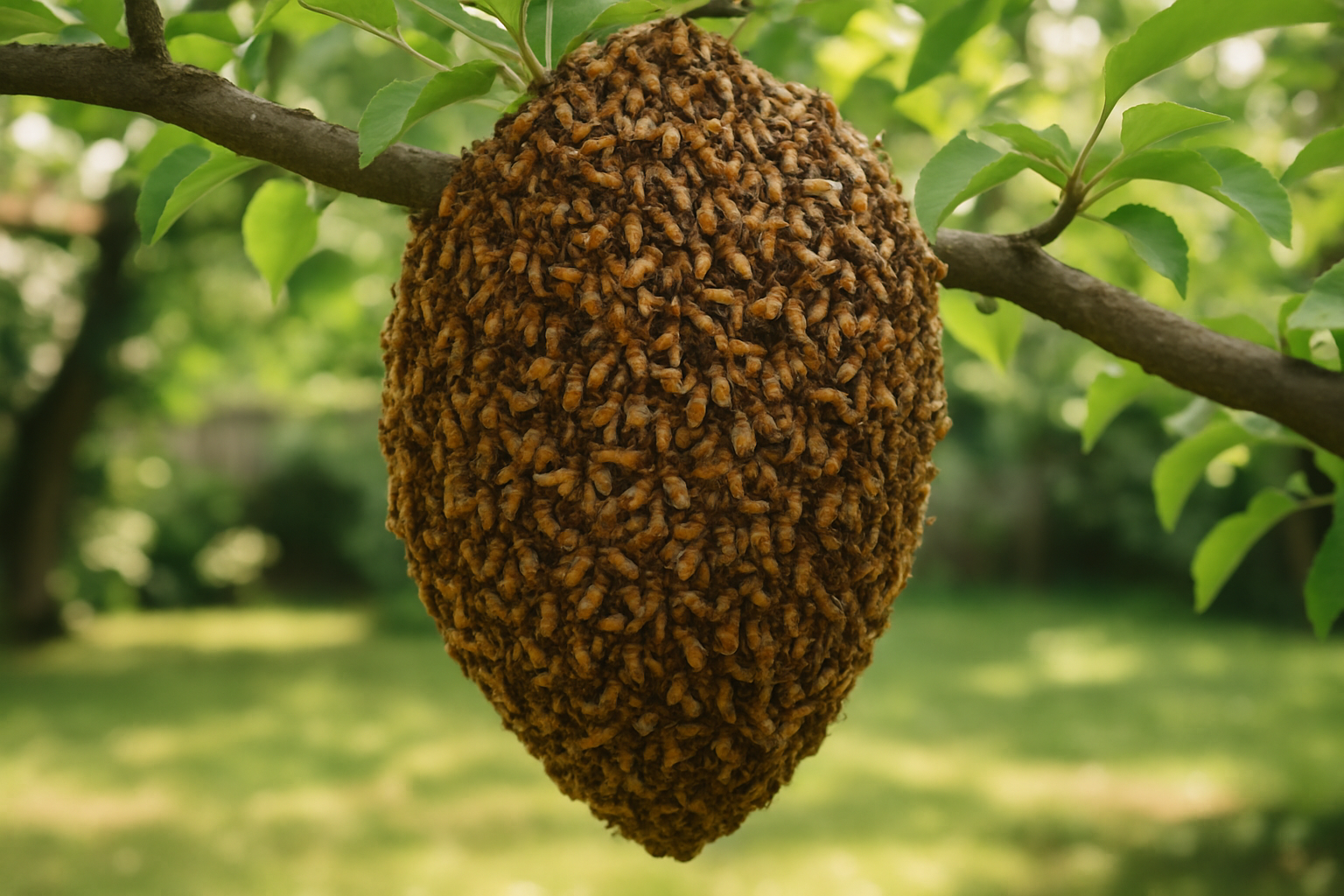
My first swarm loss happened in May of my second year. I was convinced my hives were fine — checked them two weeks before and everything looked good. Then I came home from work one Friday to find one colony half-empty, a tennis-ball-sized cluster of bees clinging to my neighbor’s rosebush, and a voicemail from said neighbor that I still wince about. A third of my bees were gone and I had no one to blame but my own inspection schedule.
Swarms are natural. Bees have been doing it for millions of years. But for a beekeeper who’s invested time and money into a productive colony, losing half the population to a swarm hurts — in both productivity and neighbor relations. The good news is that swarm prevention is manageable if you stay ahead of it. The bad news is that “staying ahead of it” means doing the work before you see swarm cells, not after.
Why Bees Swarm (and Why It Matters for Prevention)
Swarming is the colony’s reproductive mechanism. When a colony runs out of space — whether physical space for brood or storage space for incoming nectar — the bees begin preparing to split. The queen lays eggs in queen cells along the bottom bars of frames. Roughly the time those cells are capped, the old queen leaves with about half the forager population to find a new home. What you’re left with is a queenless hive waiting for a virgin queen to emerge, mate, and start laying — a gap of three to four weeks in production.
Prevention works by removing the triggers: crowding, excessive honey in the brood nest, and an aging queen. When you understand the cause, the tools make more sense.
The Most Effective Prevention: Add Space Before They Need It
Adding honey supers or additional brood boxes at the right time is the single most effective swarm prevention tool. The problem is timing. Most beginners add supers too late — when the colony is already back-filling the brood nest with nectar (called “honey bound”). By the time nectar is hitting the brood frames, swarm preparations are often already underway.
My rule: add the first super when the bees have drawn out and are covering eight of ten frames in the lower brood box. At that density, they need more space within the next week, not the next month. Don’t wait for the nectar to show up.
- Add supers early — when 80% of the lower box is occupied
- Use drawn comb whenever possible (bees move up faster onto drawn comb)
- Check super fill level weekly during peak flow
- Don’t let supers cap out without adding another above them
Checkerboarding the Brood Nest
Checkerboarding is a technique where you alternate frames of capped honey with empty drawn comb in the space above the brood nest, creating a “broken” honey band that tricks bees into thinking the hive has empty storage space. Developed by Walt Wright, it’s particularly effective in areas with a strong early nectar flow. I use it in February and March before dandelions bloom and it meaningfully reduces my swarm losses on overwintered colonies.
Regular Inspections Are Not Optional
You cannot prevent what you don’t inspect for. During swarm season (April through June in most of the US), open your hives every seven to ten days. Look at the bottom bars of every brood frame. Look for capped queen cells. One or two supersedure cells along the middle of a frame is different from a row of capped cells along the bottom bar — that’s a swarm about to happen.
If you find capped queen cells and a crowd of bees, you’re behind. You may be able to do a split to prevent the actual swarm departure, but the preparation is already in progress.
Making a Preemptive Split
The most reliable swarm prevention is making a split before swarm cells appear. I split every colony that’s covering eight or more frames in late April or early May, regardless of whether I see swarm preparations. Half the bees go into a new box with a frame of eggs to raise a new queen. The parent colony loses the population pressure and the swarm impulse typically subsides. I end up with more colonies, not fewer bees.
Common Mistakes in Swarm Prevention
- Checking too infrequently: Two-week inspection intervals miss swarms. During peak season, seven days is the minimum.
- Destroying all queen cells: If you destroy every queen cell without addressing the cause of swarming, the bees will just make more. Removing cells buys you one week at best.
- Adding space too late: Once the brood nest is honey-bound, space elsewhere in the hive doesn’t solve the problem. The queen still can’t lay.
- Ignoring the queen’s age: An older queen produces less swarm-inhibiting pheromone. Colonies with two- and three-year-old queens are at much higher swarm risk.
Swarm prevention isn’t about tricking bees into staying. It’s about giving them enough space, a productive queen, and management that keeps pace with their growth. Do the inspections, add space early, split proactively, and you’ll hold most of your colonies together through spring. You won’t eliminate swarming entirely — no one does — but you’ll lose a lot fewer bees to the neighbor’s rosebush.