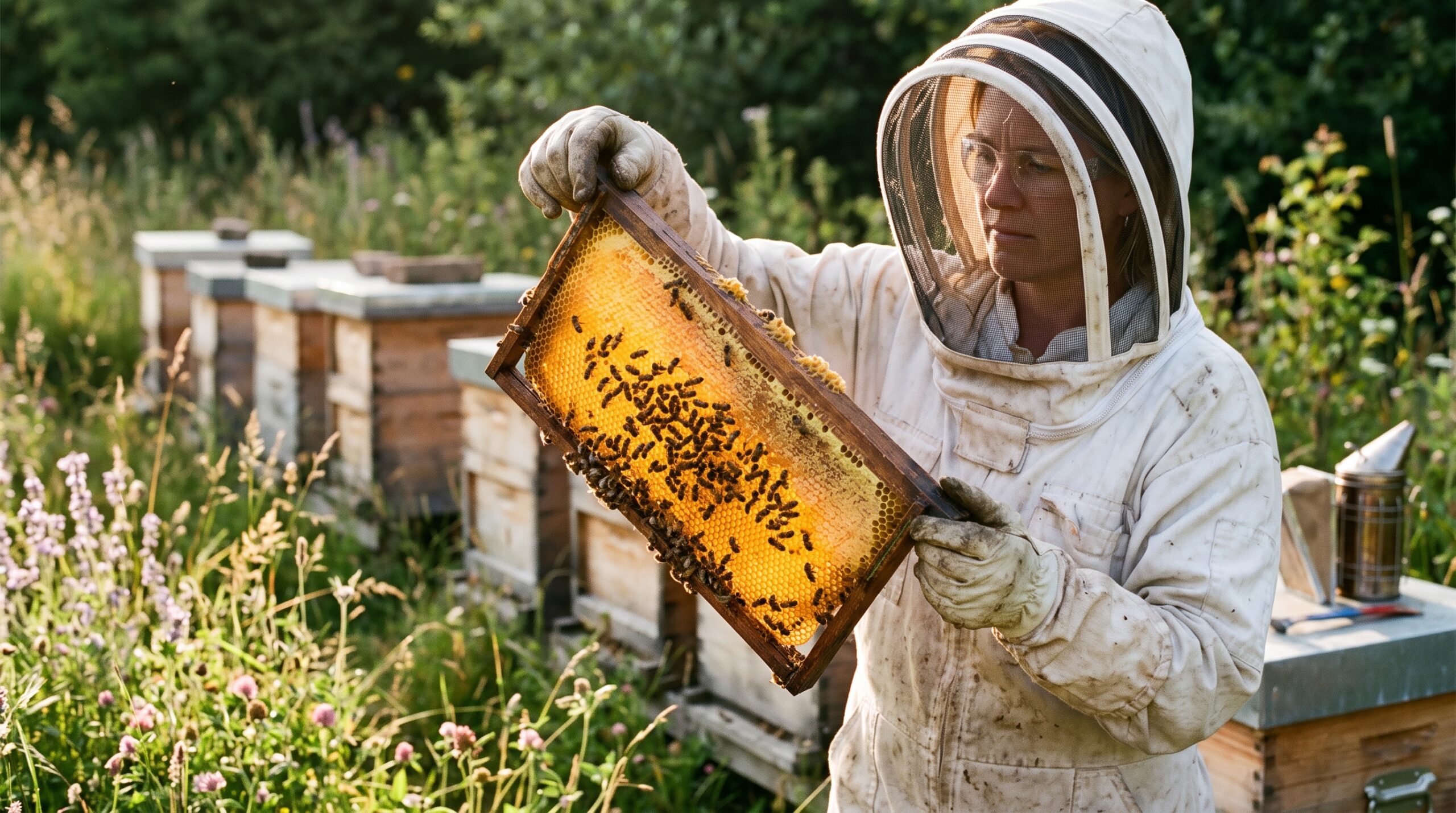
Pulling honey too early is one of the most common mistakes I see new beekeepers make. Either they’re excited to taste their first harvest, or they’re worried the bees will fill every frame and run out of room. I get it — after months of tending hives, the idea of finally extracting honey is hard to resist. But harvest timing matters more than most people realize, and getting it wrong can mean wet, fermenting honey that goes bad in the jar.
The good news: bees give you clear visual signals when honey is ready. Once you know what to look for, reading frames becomes second nature. Here’s what fifteen years of harvest seasons have taught me about timing it right.
The Capping Rule — and Why It’s More Than a Number
The most widely cited standard is that a frame is ready to harvest when at least 80% of the cells are capped with wax. That’s a decent rule of thumb, but it can mislead you if you stop there. What you really want to know is the moisture content of the honey — and capping is a proxy for that, not a guarantee.
Bees cap honey when the water content has dropped below roughly 18–18.5%. Above that threshold, wild yeasts can ferment the sugars, and your honey will eventually fizz and sour in storage. The bees cap because they know the honey is stable. Uncapped cells are usually still evaporating moisture.
In a dry climate — the high desert, say, or a good summer in the Midwest — uncapped honey can be well below 18% simply because the ambient air is dry enough to dehydrate it quickly. In humid regions like the Southeast or Pacific Northwest, uncapped honey might sit at 20%+ even weeks after being deposited. Climate changes the math. If you’re in a high-humidity area, I’d push that 80% threshold to 90% or even wait for full capping before harvesting.
The Shake Test
Before you pull any frame for extraction, do the shake test. Hold the frame horizontally over the hive — honey side down — and give it a sharp downward snap, like you’re cracking a whip. If nectar sprays out, the water content is too high and the frame isn’t ready. If nothing or almost nothing drips, you’re in good shape.
This is the fastest field check you have, and it works. I do it on every frame before pulling. A single wet frame in an otherwise ready super can dilute the whole batch, so it’s worth the thirty seconds per frame.
Reading the Frames: What to Actually Look At
When you pull a frame from the super, look for these signs of readiness:
- Capping color and texture: Fresh cappings are white and dry-looking. They’ll feel papery when you brush them. Yellow or brownish cappings are older but still fine. Wet, shiny cappings that look almost translucent can be a sign of high humidity — handle those carefully.
- Uncapped cells: Hold the frame up to natural light and look into uncapped cells. Honey that’s ready will appear thick and viscous, barely moving when you tilt the frame. Nectar in progress is thin and watery — it will flow freely.
- Capping coverage: Count roughly. If you see open cells clustered in a patch bigger than your palm, give that frame more time. Scattered open cells throughout the frame are usually fine if the honey is thick.
- Brood-free zone: Make sure you’re looking at a honey super frame, not a brood frame that’s been backfilled. Brood nest honey is off-limits at harvest — those frames belong to the bees for winter food.
Using a Refractometer
If you’re serious about honey quality — especially if you plan to sell — get a refractometer. They cost $30–60, and they’ll tell you the exact water content of your honey within minutes. You need a bee-specific refractometer calibrated for honey (the standard Brix models used for wine and juice read differently).
Scrape a small sample of uncapped honey from a test cell, put a drop on the prism, close the cover plate, and look through the eyepiece. You’ll see a line crossing a scale. Anything below 18% and you’re good. Between 18–20%, you have a narrow window — extract and get it in jars quickly, and it’ll be fine for short-term storage. Above 20%, put the frame back and wait.
In my apiary I check one frame per super with the refractometer on every harvest. It takes five minutes and has saved me from at least a dozen batches that looked ready but weren’t.
Timing in the Season
Nectar flows dictate when supers fill, but they also dictate the rhythm of harvest. A couple of timing notes:
- Harvest before the fall dearth: If you’re in a region with a summer dearth followed by fall flows, harvest summer honey before the bees start drawing on it to survive the lean period. I pull supers in late July and early August in my area regardless of whether every last frame is capped, because leaving them on risks having the bees consume that honey in August.
- Don’t harvest in fall for winter bees: Bees need roughly 60–80 lbs of honey to survive a northern winter. If your hives are light going into fall, leave the honey on — or better, take a small portion and supplement with sugar syrup if needed.
- Morning harvests: I prefer to pull supers in the morning when the field bees are out foraging. Fewer bees in the super means less chaos during extraction setup.
Common Mistakes to Avoid
- Harvesting an entire super when only half is ready. Pull the ready frames individually if you need to, and leave the unready ones for another week.
- Relying only on visual inspection in humid weather. High humidity can make uncapped honey look thick when it isn’t. Always combine visual checks with the shake test.
- Leaving pulled supers sitting uncovered. Once you’ve pulled frames from the hive, get them into an extraction room quickly. Exposed honey in warm weather can absorb moisture from the air surprisingly fast.
- Harvesting from a hive that’s low on stores. Check the brood boxes before you pull anything. If the lower boxes feel light when you lift the back edge, the bees need that honey more than you do.
Harvest timing is one of those things that sounds complicated until you’ve done it a few times, and then it becomes instinctive. Spend a couple of seasons really looking at your frames before every harvest, shake-testing everything, and checking a few with the refractometer. You’ll develop an eye for it. And the first batch of properly-timed, low-moisture honey you extract will taste noticeably better than anything you pulled in a hurry — that much I can promise.