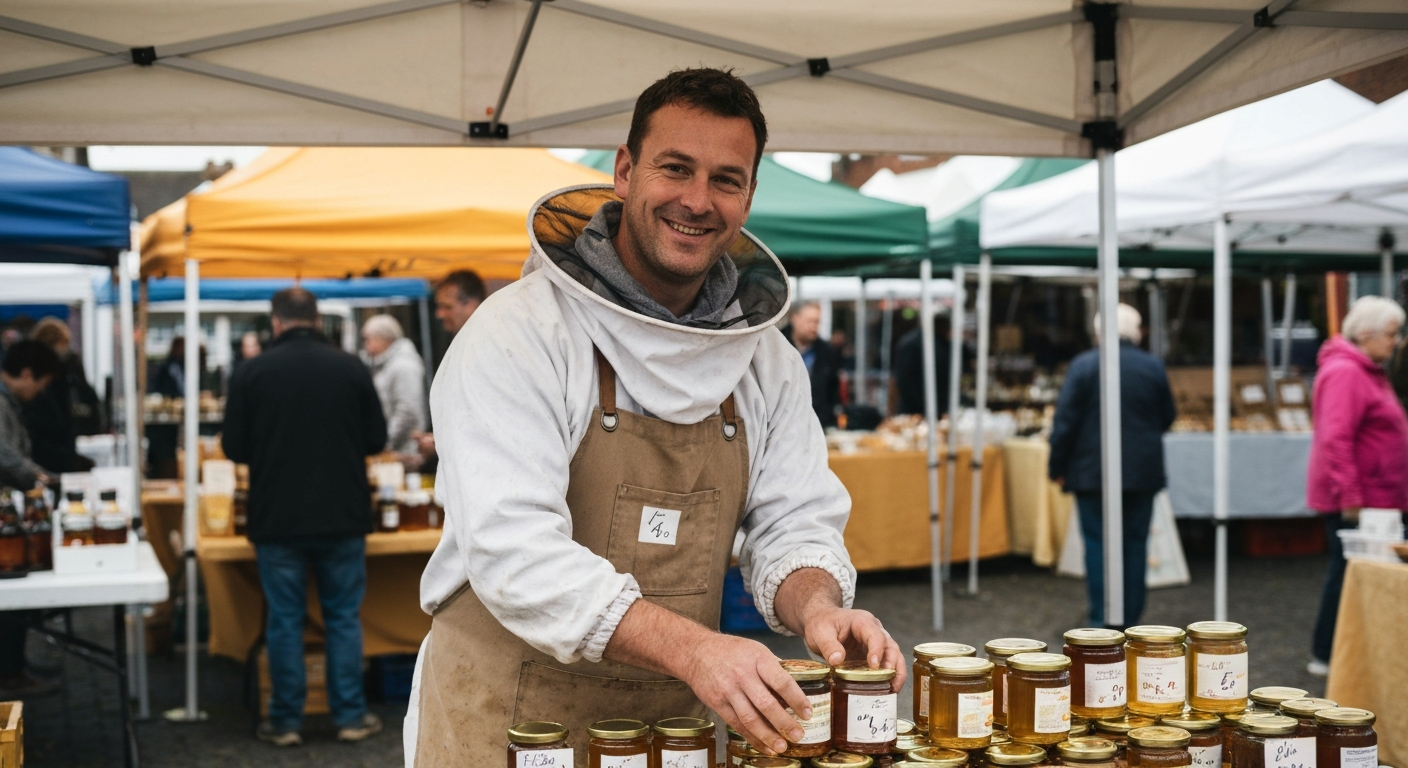
The first jar of honey I ever sold went for four dollars. I drove thirty minutes to deliver it, and the buyer smiled like she’d gotten a deal. She had. I’d spent about eleven dollars in time, fuel, and supplies to produce that single pound of raw wildflower honey, and I handed it over with a grin because I didn’t know any better. It took two full seasons before I started pricing honey the way a business owner would instead of the way a beekeeper in love with bees would.
Pricing honey correctly matters — not just for your bank account, but for the entire small-scale honey market. When hobbyists undersell at four dollars a pound, it drags down the prices that serious producers can charge and signals to customers that cheap honey is the norm. Your pricing reflects your true costs, and getting that number right is one of the most important things you can do for your apiary’s future.
Start With Your Real Costs
Most first-time sellers calculate honey price by looking at what their neighbor charges or what a grocery store shelf says. That’s backwards. Start with your actual cost of production — everything that went into getting that honey into a jar.
- Equipment amortization: Your extractor, frames, jars, lids, labels, and hive bodies all cost money. Spread that cost over the expected lifespan and include a portion in your per-pound calculation.
- Consumables: Jar lids, labels, beeswax for sealing, shipping materials if you sell online.
- Your time: This is the one people forget. Track your inspection hours, harvest days, bottling sessions, and market time. Value your time at least at minimum wage — preferably more.
- Hive losses and replacement: Colonies die. Divide that replacement cost across your productive hives.
- Market fees and transaction costs: Farmers market booth fees, PayPal or Square percentages, farmers market liability insurance.
Add it all up, divide by your annual honey yield in pounds, and you have your break-even price. Your selling price needs to clear that by a meaningful margin.
Understand the Market Tiers
Honey doesn’t sell at one price. It sells at several, depending on where and how you sell it, and what story comes with the jar.
At a mainstream grocery store, commodity honey — often blended, ultra-filtered, and imported — sells for three to six dollars a pound. You cannot compete with that, and you shouldn’t try. Your honey is local, raw, single-source, and traceable. You’re playing a different game entirely.
Local raw honey at a farmers market in most regions commands twelve to twenty dollars per pound. Specialty varietals — sourwood, tupelo, orange blossom from named groves — often go higher. If you’re in an urban market with health-conscious shoppers, push toward the top of that range. Rural markets with price-sensitive buyers might sit in the middle.
Subscription boxes, specialty food shops, and direct restaurant sales can often get you above retail because the buyer values the relationship and the story, not just the product.
Use a Pricing Formula
A simple formula that works for most small apiaries:
- Calculate total production cost per pound (see above).
- Add a 40–60% profit margin on top. This isn’t greed — it covers unexpected losses, scaling, and your sanity.
- Compare against local market prices. If you’re far below market, raise to market. If you’re above, identify why your honey commands a premium (or adjust).
- Price by size tier. A 1-lb jar is not simply half the price of a 2-lb jar — smaller jars often carry a price premium per ounce because of packaging costs and convenience.
Charge for Specialty Products
Comb honey, whipped honey, flavored honey, and cut comb all carry higher margins than extracted liquid honey. Infused honeys (hot pepper, lavender, ginger) can retail at twenty-five to forty dollars per pound at markets where herb and specialty food vendors are common. If you’re only selling extracted wildflower honey, you’re leaving money on the table.
Beeswax products — lip balms, candles, wood conditioners — carry even higher margins per pound of input material than honey does. A single pound of beeswax can yield thirty to fifty dollars of retail product.
Common Mistakes to Avoid
- Matching the lowest price at the market: Race to the bottom ends with nobody making money. Your honey is not the same as mass-market honey. Price accordingly.
- Not adjusting for varietal or season: Your summer wildflower and your late-season goldenrod are not the same product. Price them differently if there’s a meaningful flavor difference.
- Selling bulk to cut cost on jars: Bulk buyers pay wholesale prices. Know your minimum acceptable wholesale rate before you agree to supply anyone in volume.
- Forgetting sales tax: In many states, honey sold directly to consumers is exempt from sales tax if it’s unprocessed agricultural product. Check your state’s rules — and if you’re exempt, note that on your booth signage. It can be a selling point.
Quick Reference: Pricing Benchmarks
- Raw local wildflower: $12–20/lb retail
- Specialty varietal (sourwood, tupelo, orange blossom): $20–35/lb
- Comb honey: $20–30 per section
- Whipped/creamed honey: $14–22/lb
- Infused honey: $18–35/lb
- Beeswax (raw): $8–15/lb wholesale; processed into products, $30–50/lb equivalent retail
Revisit your pricing every spring before market season opens. Input costs change, your yield improves or drops, and local market conditions shift. The price that made sense last year might be leaving money behind this year — or pricing you out of a market that’s tightened. Set it deliberately, revisit it annually, and stop apologizing for charging what your honey is worth.