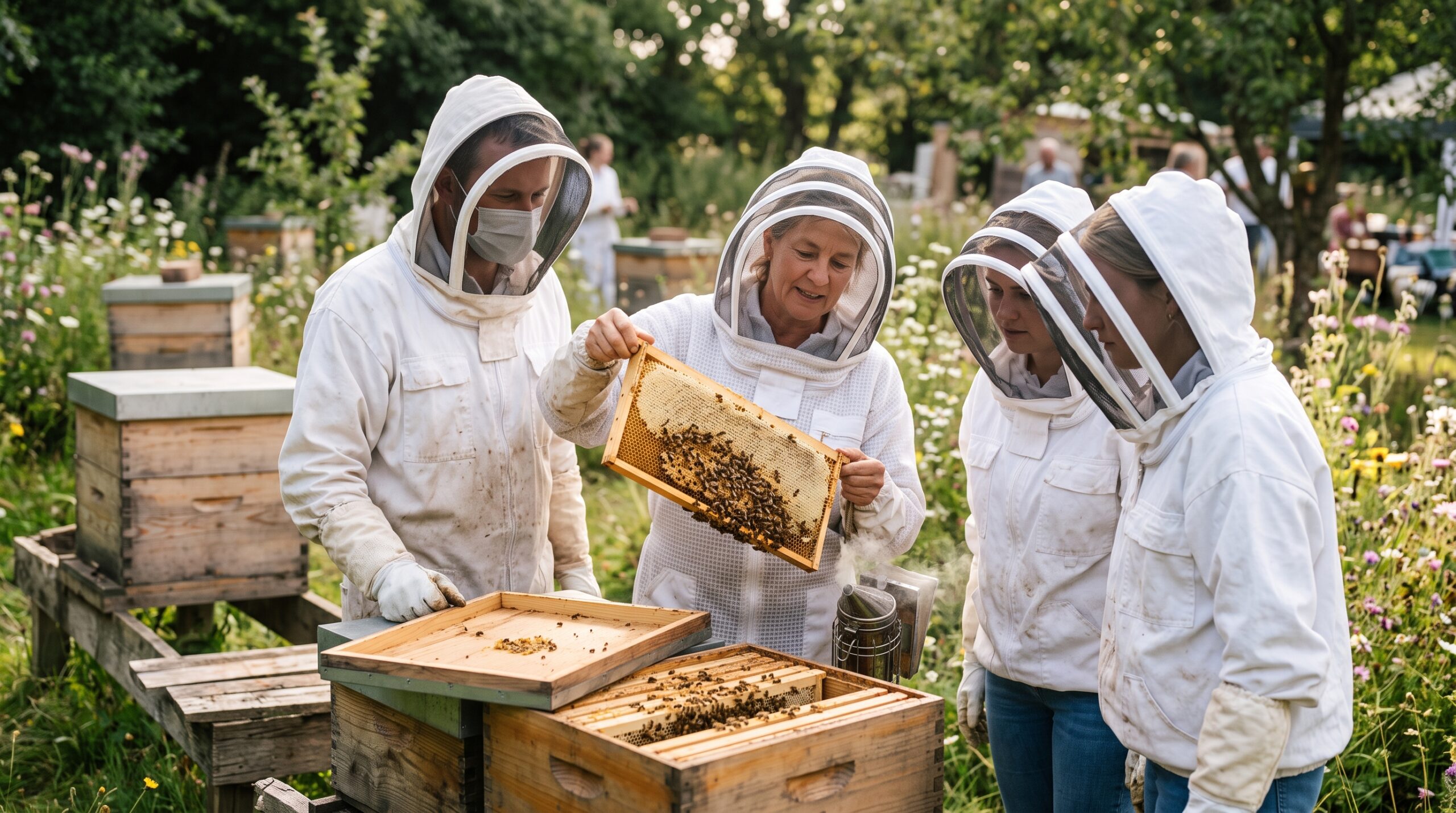
If I could go back and give my year-one self one piece of advice, it wouldn’t be about hive selection or what bees to buy. It would be simpler: join a local beekeeping club before you do anything else. I waited almost six months before I found mine, and I lost my first colony because of it.
Books are good. YouTube is useful. But there is no substitute for standing next to an experienced beekeeper who is looking at the same frame you’re looking at and saying, “See those sunken cells with that discolored cap? That’s European foulbrood. Here’s what we’re going to do.”
What a Club Actually Gives You
The obvious thing is mentorship, but it goes beyond just having someone to call when something goes wrong. A good beekeeping club offers:
Localized knowledge. Beekeeping is intensely regional. The nectar flows in coastal Georgia are different from those in New England. Varroa pressure, overwintering strategies, common pests, local swarm seasons — all of this varies by geography. A national forum can point you in roughly the right direction, but a beekeeper who has been keeping hives in your county for twenty years knows exactly what to expect in your microclimate.
Equipment sharing. Most clubs have extractors, uncapping tanks, and other seasonal equipment available to members at no or low cost. A honey extractor runs $300–$1,000 new; borrowing the club’s extractor for your first harvest costs nothing. Same with queen-rearing equipment, pollen traps, and other specialty items you might use once a year.
Bulk purchasing. Clubs often coordinate group orders for hives, packages, queens, and medications, getting prices well below retail. This alone can more than offset the cost of membership fees.
Emergency help. When your hive swarms at noon on a Tuesday and your only call option is a beekeeper friend three states away, that’s when you’ll be grateful for local contacts. Established club members have usually seen every common crisis and know the fastest path through it.
What to Look For in a Club
Not all clubs are equally active. Some are little more than a monthly meeting where people drink coffee and compare notes. Others run hands-on workshops, maintain demonstration apiaries, and organize mentorship programs. Before joining, find out:
- Does the club have an active mentorship or buddy program for new beekeepers?
- Do they offer hands-on hive demonstrations, or just lectures?
- Is there a shared apiary or demonstration site?
- How often do they meet, and where?
- Do they have a loaner extractor or shared equipment?
The best clubs I’ve visited have a working apiary where members bring their questions to actual hives. You can’t learn beekeeping from slideshows. A club that gets people into gear and in front of real bees is worth driving an extra half hour for.
Finding Your Local Club
Your state beekeeping association’s website is the best starting point. Most maintain county-level club directories. If you can’t find one easily:
- Search “[your county] beekeeping association” or “[your state] beekeepers”
- Contact your county extension office — they often maintain lists of local agricultural groups
- Ask at a local farm supply or beekeeping supply store
- Look at the American Beekeeping Federation’s member directory at abfnet.org
If you live rurally and there’s genuinely no club within a reasonable drive, look for an online state association with active forums or virtual meetings. It’s second best, but better than nothing.
What to Do When You Get There
Walk in and be honest about where you are. “I’m completely new, I haven’t installed my first hive yet, and I’m trying to figure out what I don’t know.” That introduction will get you more help than any other approach. Experienced beekeepers like teaching — that’s usually why they show up to clubs in the first place.
Ask if there’s a mentorship program and put your name on it. Ask when the next hands-on workshop is. Ask if there are any members nearby who wouldn’t mind a beginner tagging along for an inspection. Most will say yes.
Take notes. The localized knowledge you gather in your first few club meetings — bloom calendars, varroa treatment windows, what diseases are active in your area this season — is worth more than any book.
The Compounding Value
The real payoff from club membership isn’t in year one. It builds over time. By year three, you’re the person newer beekeepers are calling. By year five, you’re on the other side of the frame, saying “See those sunken cells?” to someone who just started. The beekeeping community is genuinely generous with knowledge, and that generosity flows in every direction.
Show up to the next meeting. Ask your dumbest question first and get it out of the way. You’ll learn more in one hands-on session with an experienced beekeeper than in three months of reading.
Master Beekeeper Programs
Many state associations offer formal master beekeeper certification programs — structured learning tracks that take you from apprentice to journeyman to master through a combination of coursework, written exams, and practical demonstrations. These aren’t gatekeeping exercises; they’re structured curricula that fill in gaps you’d otherwise take years to discover on your own. Pursuing certification, even if you never complete the full program, gives you a systematic roadmap through the skills you need. Ask your local club which state or national certification paths they support, and consider starting the apprentice level in your first or second year.