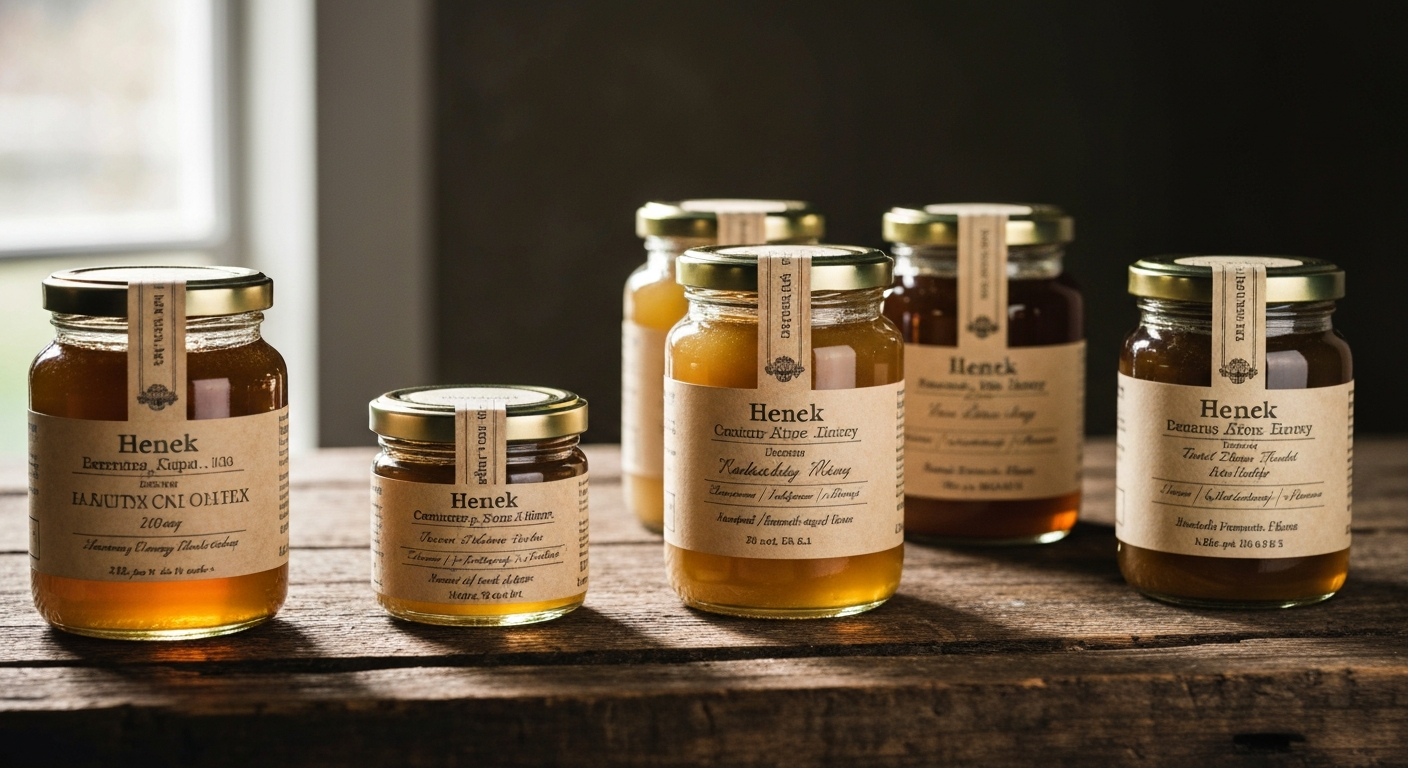
I spent two seasons selling honey at a farmers market with labels that were, as I later discovered, technically non-compliant with FDA regulations. Nobody stopped me. No inspector appeared. But when I started exploring wholesale placement in a local food co-op, the buyer handed my jar back and said “you’re missing your net weight in both metric and US customary units.” It was a small thing, but it cost me the placement while I redesigned labels.
Honey labeling requirements in the United States exist at two levels: federal (FDA) and state. If you only sell honey you produce directly to end consumers within your state — never crossing state lines — you may be subject only to your state’s agricultural department rules, which are sometimes more lenient. The moment you sell across state lines or through a retailer, federal requirements kick in fully.
Federal (FDA) Requirements for Honey Labels
Under the Fair Packaging and Labeling Act and FDA regulations, packaged food sold to consumers must include specific information. For honey jars:
- Product identity: The word “Honey” must appear prominently on the principal display panel. If it’s a varietal (e.g., clover honey, wildflower honey), you can name the varietal but must still include the word “honey.”
- Net quantity of contents: Must appear on the lower 30% of the principal display panel, in both US customary units (oz or fl oz) and metric units (g or mL). For a 1-pound jar: “NET WT 1 LB (454 g)” or “NET WT 16 OZ (454 g).”
- Name and place of business: Your name (or business name) and city, state, and ZIP code must appear on the label. If you’re not the manufacturer, the label must indicate your relationship (“Distributed by,” “Sold by”).
- Ingredient statement: Pure honey typically lists just “Honey” as the ingredient. If you’ve infused or blended your honey (e.g., hot pepper honey), all ingredients must be listed in descending order by weight.
There is currently no federal requirement to include a harvest date, a best-by date, or a country of origin for domestically produced honey. However, country of origin labeling may be required if you’re selling through retailers subject to COOL regulations.
State-Level Requirements
State requirements vary significantly. Many states have enacted their own honey regulations through their department of agriculture, and some are stricter than the federal baseline.
Common state-level additions include:
- Beekeeper registration number: Some states require licensed beekeepers to include their registration number on retail honey labels.
- State of origin: Some states require “Produced in [State]” or similar language for honey sold within that state.
- Grade or “raw” labeling: The use of “raw honey” on labels is not formally defined federally, but some states have addressed it. Know your state’s position before using “raw” as a marketing term.
- Cottage food exemptions: Many states exempt small producers selling directly to consumers from some requirements. Your state’s cottage food or direct farm sales law may reduce your labeling burden — but usually only for direct sales, not retail placement.
Contact your state’s department of agriculture and specifically ask about honey labeling requirements. Many have published guidance documents or will answer questions directly. Your state beekeeping association is also a good resource — they often track regulatory changes affecting local producers.
What “Raw,” “Local,” and “Unfiltered” Actually Mean
These terms appear everywhere on honey labels and in honey marketing, but most of them have no formal legal definition in the US.
- “Raw”: Commonly understood to mean honey that hasn’t been heated above hive temperature (around 95–105°F). There is no federal standard definition. If you use this term, be prepared to explain what it means to customers and inspectors.
- “Local”: No legal definition. Use it to mean whatever you honestly mean — typically that the honey was produced within a reasonable distance of where it’s sold.
- “Unfiltered”: Again, no federal standard. Usually means the honey was strained but not pressure-filtered to remove pollen. Pollen content is verifiable — pollen DNA can determine geographic origin, which is actually how honey fraud is often detected.
- “Pure”: This one has more weight. Labeling honey as “pure” when it’s been blended or adulterated can trigger FDA action.
Quick Reference: What Must Be on Every Jar
- Product name: “Honey” (or varietal name + “Honey”)
- Net weight in both oz/lb AND metric (g)
- Your name and address (city, state, zip)
- Ingredient statement (usually just “Honey” unless blended)
Optional but strongly recommended:
- Harvest year or date
- Varietal name (clover, wildflower, orange blossom, etc.)
- State of origin
- “Raw” or “unfiltered” with an honest definition ready
- Your website or QR code for more info
If you’re selling wholesale into retail — grocery stores, food co-ops, specialty food shops — ask what their buyers require before you print labels. Many retailers have their own additional requirements beyond FDA minimums, and it’s far easier to get that information before you print five hundred labels than after.
Design your labels to comply from the start. Reprinting is expensive and time-consuming, and getting it right early sets a professional tone that pays dividends when you’re ready to scale.