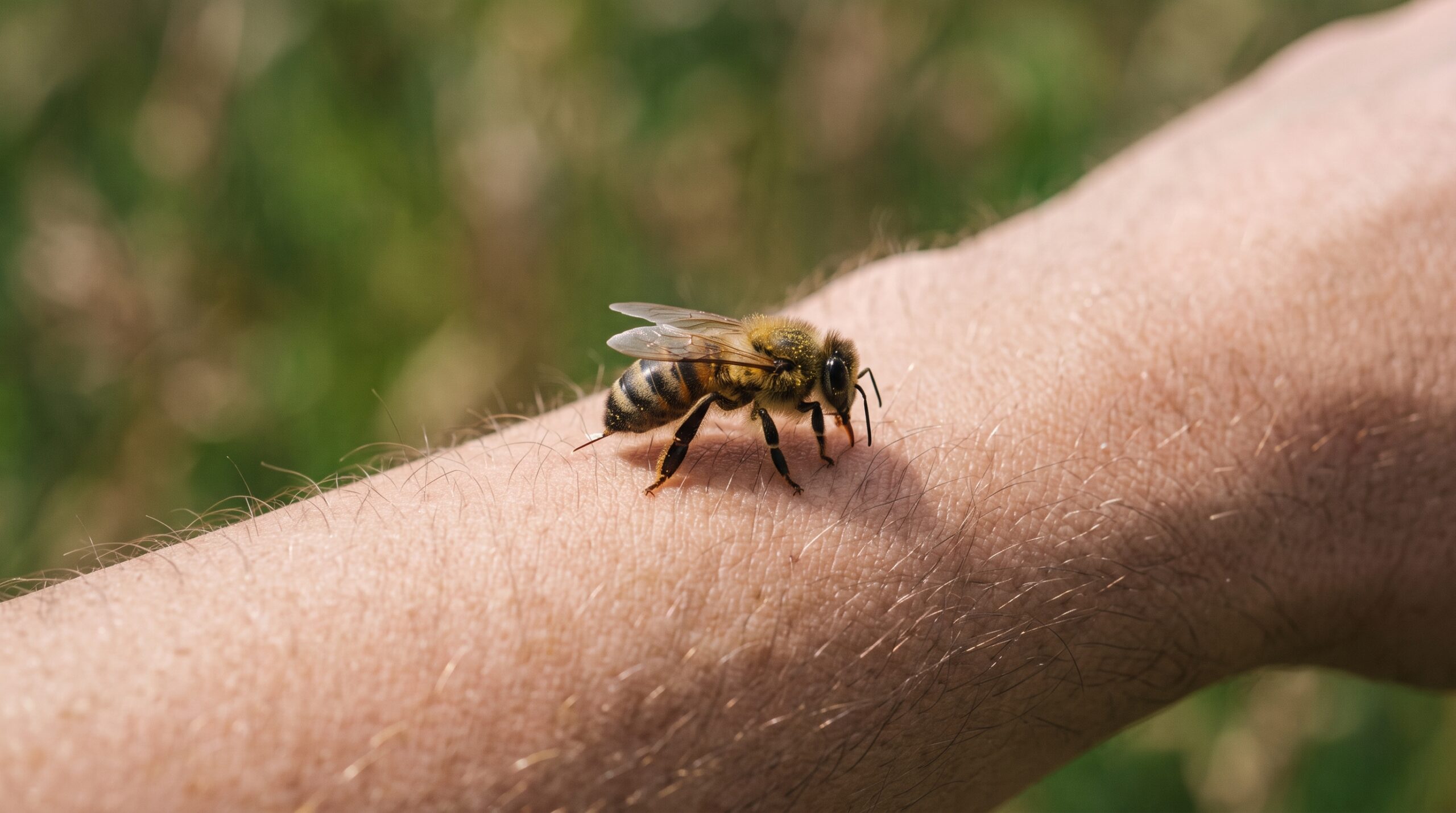
You are going to get stung. This is not a maybe — it’s a certainty of beekeeping, and the sooner you make peace with it the better. After fifteen years and thousands of inspections, I still get stung regularly, and most of the time I barely notice. Understanding how stings work, how to respond correctly, and when to take them seriously will serve you well from day one.
The sting isn’t usually the problem. The reaction to the sting is what you need to manage.
What Happens When You’re Stung
A honeybee’s stinger is barbed, which means it embeds in skin and detaches from the bee’s abdomen when she pulls free. The stinger keeps pumping venom for up to a minute after it’s in your skin, so removing it quickly reduces the total dose delivered. The bee herself dies shortly after stinging — this is specific to honeybees and only occurs when stinging thick mammalian skin. Bees can sting other insects repeatedly without losing their stinger.
The venom contains a mix of compounds including melittin (the primary pain agent), phospholipase A2, hyaluronidase, and histamine. Melittin causes direct cell damage and pain. Hyaluronidase helps the venom spread through tissue. Together they cause the familiar immediate burning sensation followed by localized swelling and itching that can last one to three days.
Immediate Response
Remove the stinger as fast as possible. The method matters less than the speed. The old advice to avoid squeezing the venom sac by scraping rather than pinching is based on logic but not well supported by research — what studies exist suggest the difference is small. Scrape, flick, pinch, use your fingernail — just get it out within a few seconds.
After removal:
- Move away from the hive area before addressing the sting
- Wash the site with soap and water if possible
- Apply a cold pack or cold wet cloth to reduce swelling
- Take an antihistamine (diphenhydramine/Benadryl or loratadine/Claritin) to reduce itching and localized swelling
- Hydrocortisone cream applied to the site helps with itching over the next day or two
Most stings feel most painful in the first thirty to sixty seconds, then subside to a dull ache. Local swelling typically peaks at twelve to twenty-four hours and resolves within two to three days. A sting on the back of the hand on Monday may leave the hand noticeably puffy by Tuesday morning — this is normal local reaction, not an allergic response.
Normal vs. Allergic Reaction: Know the Difference
This distinction matters enormously. A severe sting reaction in the wrong location or from multiple stings can be serious, but so can missing signs of true systemic allergy.
Normal local reaction: Pain, redness, swelling, and itching at and around the sting site. Can be significant — a sting near the eye can swell the entire eyelid shut by the next day. Still normal if the symptoms stay localized to the area of the sting.
Large local reaction: Swelling that extends well beyond the sting site — for example, a hand sting that swells the entire forearm. Still technically a local reaction, though uncomfortable. Larger local reactions are more common in people who are stung repeatedly over time; the immune response can become exaggerated even without systemic allergy.
Systemic allergic reaction (anaphylaxis): This is the dangerous one. Signs include hives or rash in areas of the body away from the sting site, difficulty breathing or throat tightening, swelling in the mouth or throat, dizziness, rapid pulse, nausea or vomiting, or a feeling of impending doom. These symptoms can appear within minutes of a sting and escalate rapidly. This is a medical emergency — call 911 or get to an emergency room immediately.
True anaphylaxis to bee stings occurs in roughly 0.5–3% of the population. If you’ve had a systemic reaction before, talk to an allergist before keeping bees. Venom immunotherapy (allergy shots) is highly effective and can dramatically reduce reaction severity over time. Many allergic beekeepers manage successfully with immunotherapy and a prescribed epinephrine auto-injector (EpiPen).
Building Tolerance
Many beekeepers find that after the first season of regular stings, their local reactions become smaller and less severe. This is natural desensitization — the immune system adjusting to regular venom exposure. Don’t count on it, but many people do experience it.
Keep in mind that desensitization can work the other way too. Some people develop increased sensitivity after initial stings. This is why it’s worth being aware of your reaction history and noting any changes over time.
Sting Prevention
- Suit and gloves prevent most stings — don’t skip them, especially as a beginner
- Use smoke properly: a few puffs before opening, occasional light puffs during inspection
- Avoid strong scents — perfume, cologne, strongly scented soap — before inspections
- Don’t swat at bees — it triggers alarm pheromone and escalates the situation
- Move slowly and deliberately in the hive
- Don’t inspect when conditions are wrong (cold, stormy, late evening)
Getting stung is part of the job. After your first sting in the field, note your reaction, treat it appropriately, and keep working. Most experienced beekeepers treat a sting the same way they treat a splinter — annoying, manageable, and not worth stopping work over. You’ll get there faster than you think.
Location-Specific Risks
Sting location matters medically. A sting on the forearm is very different from a sting near the eye, inside the mouth, or on the throat. Any sting that causes swelling near an airway — even without classic systemic allergy symptoms — warrants medical attention. Stings to the face and neck swell more visibly and can cause more significant local reactions than stings on the arms or legs. If you’re stung in the mouth (it happens — bees sometimes fly into an open mouth while you’re working without a veil) or very near the eye, monitor carefully and don’t hesitate to seek care if swelling progresses into sensitive tissue.