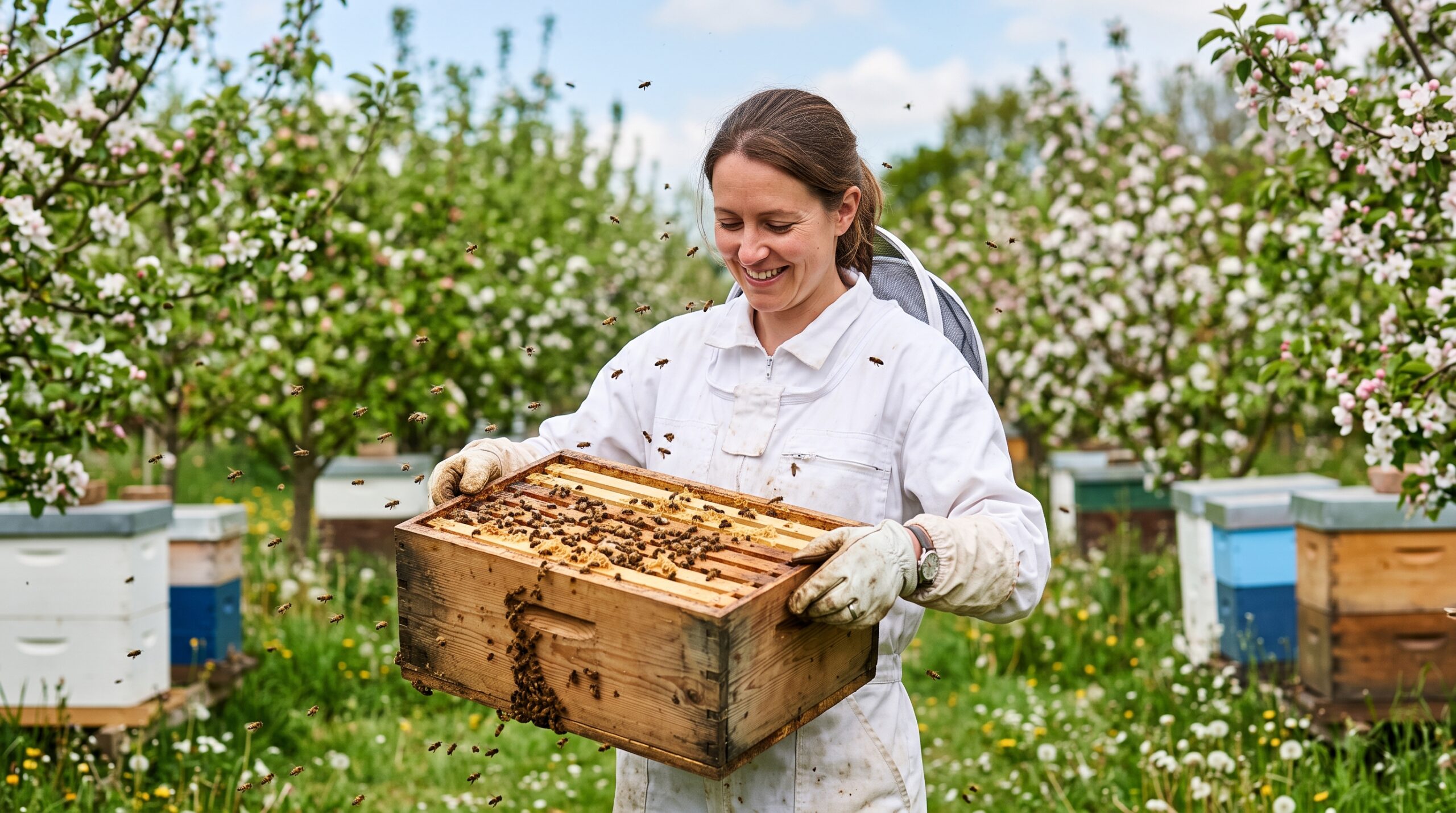
You’ve assembled the hive, picked the spot, got the suit. The final piece is actual bees — and this is where a lot of beginners make their first costly mistake. There are three common ways to acquire bees: packages, nucleus colonies (nucs), and swarms. Each has real trade-offs, and the best choice depends on your timing, budget, and local availability.
I’ve started colonies with all three methods. Here’s what I learned from each.
Packages: Flexible but Fragile
A package is a screened wooden box containing approximately three pounds of bees (around ten thousand workers) and a mated queen in a separate cage. The queen is usually not from the same colony as the workers — she was introduced into the package and the bees are still getting used to her when you receive them.
Packages are available from suppliers across the country, typically from February through May depending on region. You can order them months in advance, which makes timing predictable. They ship by air freight or ground to your local supplier or sometimes directly to your door.
The downsides are real. A package starts from scratch — no comb, no stores, no brood. The bees must build everything from nothing, and the queen must be accepted by workers who didn’t raise her. Package installation failure rates run higher than nuc failure rates, largely due to queen rejection or loss during the critical first two weeks. You’ll need to feed them heavily until they’re established, and a late spring or failed nectar flow can mean a package colony doesn’t build up enough to overwinter.
Packages work well if you’re in an area where nucs are hard to find, or if you want to start in early spring before local nuc producers have splits ready. They’re also cheaper — typically $135–$180 versus $200–$300 for a nuc.
Nucleus Colonies: The Easier Start
A nuc (short for nucleus colony) is a small established colony, usually on four or five frames. It includes drawn comb, stored honey and pollen, open and capped brood, worker bees, and a laying queen. Everything is already working together when you pick it up.
In my experience, nucs have significantly higher first-year success rates than packages. The colony is already operating as a unit. The queen is proven — she’s been laying before you bought her. The workers are her own daughters, not strangers. There’s no critical acceptance period, no scramble to draw comb from nothing. You transfer the frames into your hive body and the colony picks up where it left off.
The trade-offs: nucs are more expensive, availability is more regional (you’ll need a local producer, not a mail-order supplier), and timing is less predictable. Local producers often have waiting lists. Order early — late fall or early winter for the following spring. If you wait until March to look for a May nuc, you may find nothing available in your area.
For most first-year beekeepers, I recommend a nuc when you can get one. The learning curve is steep enough without also managing the fragility of a package start.
Swarms: Free, But Not Beginner-Friendly
A swarm is a natural split — a queen and roughly half the workers from an established colony who’ve left to find a new home. They typically cluster on a branch or fence post for a few hours to a few days while scouts locate a new cavity.
Swarms are often free. Many beekeepers advertise swarm removal, and homeowners who call your local beekeeping club with a swarm complaint will frequently hand you the bees at no charge. Swarms from local hives have bees adapted to your local environment and a naturally mated queen.
The complications: you can’t predict when or whether you’ll get a swarm, so you can’t plan around them for your first hive. Swarms also don’t always have a queen — the original queen sometimes doesn’t make it, or may be older and failing. Quality is variable. A swarm from a healthy, hygienic local apiary is excellent; a swarm from unknown stock with poor disease resistance is a gamble.
Catch swarms as supplemental colonies in year two or three, when you have the skills to assess and manage them. As your only hive in year one, they’re a coin flip.
Timing Your Acquisition
The single most important rule: have bees arriving when there is or shortly will be a nectar flow. A colony installed in April into a spring dandelion and fruit-tree bloom has a much better start than one installed in late June when the summer dearth is beginning. Know your local bloom calendar. Talk to experienced beekeepers nearby about when the spring flow typically starts in your area.
Package and nuc availability generally aligns with spring — February through May in most of the U.S. — which happens to be exactly when you want to start. Order as early as you can, even if that means placing a deposit in October for the following April.
Quick Reference: Choosing Your First Bees
- Best success rate for beginners: nuc
- Most flexible timing/availability: package
- Don’t start with: swarms (unpredictable, variable quality)
- Order deadline: late fall or early winter for spring delivery
- Installation timing: just before or during a spring nectar flow
Call local beekeeping suppliers and your regional beekeeping association to find out what’s available in your area. Your state association website usually has a supplier directory. A good nuc from a local producer who’s been keeping bees in your climate for decades is worth every penny more than the cheapest package you can find online. Start right and your first year becomes a foundation instead of a recovery.