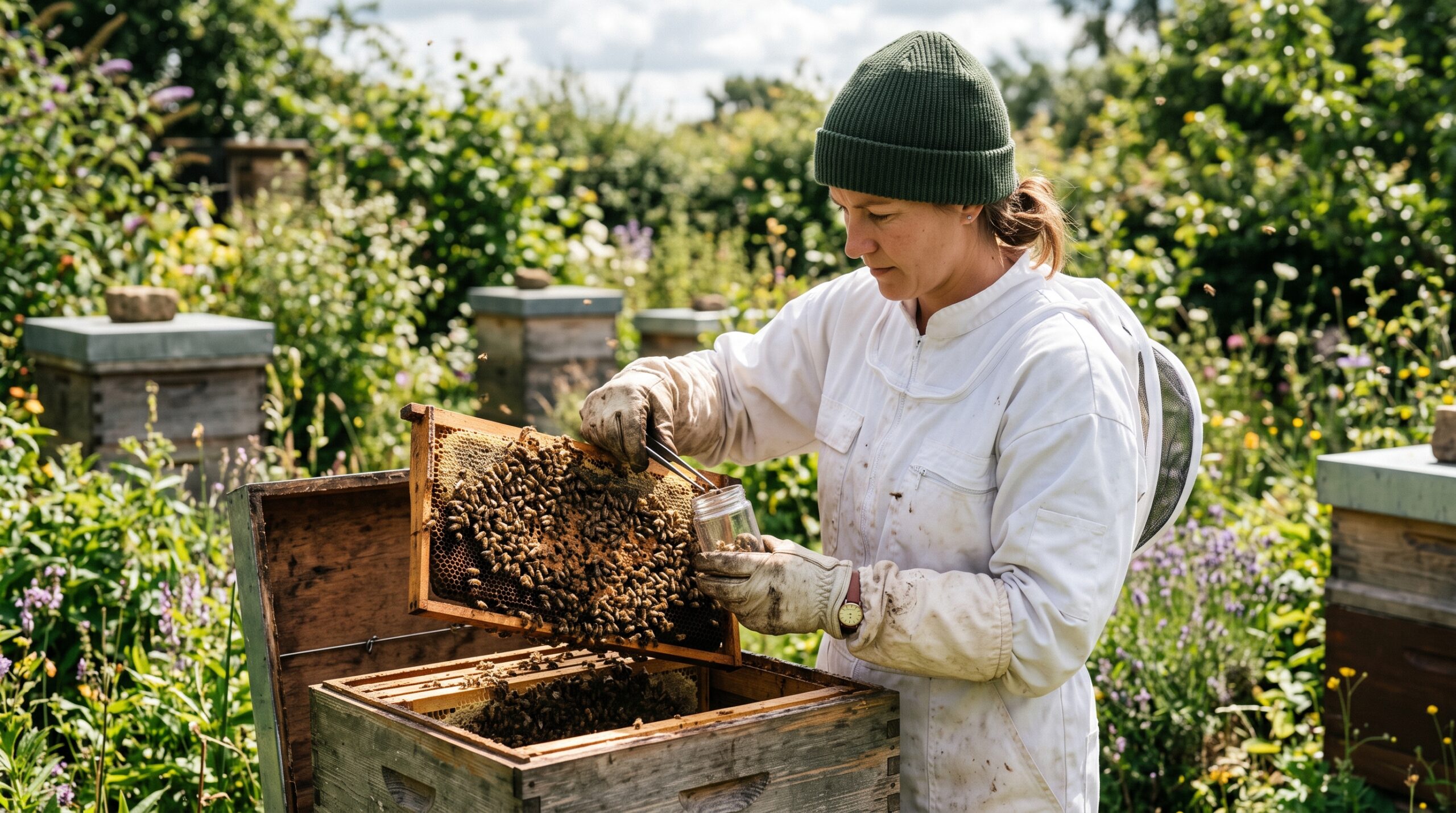
Nosema is one of those bee diseases that operates quietly. Unlike foulbrood or varroa, there’s no dramatic visual sign inside the hive that shouts “problem here.” What you get instead are colonies that seem sluggish in spring, fail to build up as expected, and sometimes dwindle without an obvious explanation. In my apiary, I’ve had years where nosema was clearly the culprit behind underperforming colonies — and years where I suspected it and a microscope told me otherwise. The lesson: don’t guess, test.
Two species matter for beekeepers: Nosema apis and Nosema ceranae. N. apis was the dominant species historically and produces classic “spring dwindling” symptoms — dysentery streaking on the front of the hive, crawling bees in spring. N. ceranae, which jumped from Asian honey bees to Apis mellifera and spread globally in the 2000s, is now the more common species in most of the US and produces subtler, often asymptomatic infections. The treatments are similar, but knowing which you’re dealing with has changed how most researchers think about the disease.
Recognizing Nosema: Symptoms to Watch For
Because N. ceranae often presents without obvious symptoms, many beekeepers don’t recognize nosema infections until the colony is already declining. Here’s what to watch for:
- Poor spring buildup: A colony that winters reasonably well but fails to expand population through April and May, even with adequate stores and a good queen, warrants nosema testing.
- Dysentery and brown streaking: More characteristic of N. apis. Brown fecal streaks on the hive entrance, landing board, or front face. A consequence of bees unable to hold feces during extended confinement.
- Crawling bees near the hive: Bees walking rather than flying, especially in early spring. Nosema-infected bees have shortened lifespans and may lose the ability to fly properly.
- Elevated winter mortality: Colonies with high nosema loads going into winter often don’t make it. The gut epithelium damage impairs digestion of winter stores.
- Apparently queenless colony with queen present: Worker bees infected with N. ceranae may show “behavioral queenlessness” — failing to respond normally to the queen’s pheromones.
None of these signs are specific to nosema. They can also result from starvation, varroa damage, poor queens, or other problems. That’s exactly why testing is essential before you treat.
Testing for Nosema
Accurate nosema diagnosis requires microscopy — there’s no reliable field test that doesn’t involve a microscope. Spores are roughly 4–6 micrometers, visible under 400× magnification. Here’s the basic process:
- Collect 30–50 adult bees from the colony (a returning forager sample from the entrance is fine, or take a sample from a brood frame).
- Place bees in a container and freeze or place in 70% alcohol to preserve them. (Fresh bees work if you can process them the same day.)
- Remove and discard the thorax and head — you want the abdomens. Grind them in a small amount of distilled water (about 1 mL per 10 bees).
- Place a small drop of the suspension on a glass slide with a coverslip.
- Examine at 400× magnification. Nosema spores appear as oval, highly refractile rice-grain shapes, clearly different from pollen grains, yeast cells, or debris.
If you don’t have a microscope, most state apiarist labs and some university extension services will run nosema tests on submitted samples for free or low cost. USDA’s Beltsville Bee Research Laboratory also accepts samples. Send in 100+ bees in a small vial of 70% alcohol or frozen and dried.
For quantifying the infection level, use a hemocytometer and count spores per bee — the standard threshold for treatment is roughly 1 million spores per bee, though N. ceranae at much lower counts can still cause disease.
Treatment: Fumagillin, Thymol, and the Current Situation
This is where things get complicated, and beekeepers in the US are in a frustrating spot right now.
Fumagillin: For years, the antibiotic fumagillin (sold as Fumidil-B) was the only EPA-registered treatment for nosema in the US, and it worked reasonably well against N. apis. However, it showed limited efficacy against N. ceranae in many studies, and its production was discontinued. As of now, fumagillin is not commercially available in the US for beekeepers. Canada still allows it under the brand name Nosevit.
Thymol and essential oil-based treatments: Some research suggests thymol has partial efficacy against N. ceranae, but results are inconsistent and it’s not EPA-labeled for nosema in the US.
Supportive management: Because drug options are limited, most extension apiarists now recommend management-based approaches:
- Ensure adequate high-quality protein stores (pollen) going into and coming out of winter — gut epithelial repair requires protein.
- Replace old comb regularly. Spores accumulate in comb over years; replacing 20–30% of brood comb annually reduces the reservoir.
- Keep colonies strong through varroa management — varroa-weakened bees are more susceptible to nosema.
- Requeen colonies that dwindle persistently with queens from hygienic stock.
- Avoid feeding honey of unknown origin (spores survive in honey).
Common Mistakes
- Treating prophylactically without testing. Treating every colony every spring for nosema “just in case” was a common practice with fumagillin, but without an available registered treatment, it’s now more about justifying the cost and effort. Test first.
- Blaming nosema for problems caused by varroa. The symptoms overlap significantly. Always rule out high mite loads before concluding nosema is your primary problem.
- Ignoring fall management. Colonies going into winter with high spore loads and low protein stores are at serious risk. Fall protein feeding and comb replacement make a measurable difference.
Nosema management in 2026 is mostly about monitoring and keeping colonies healthy enough to cope. That’s unsatisfying compared to having an effective drug treatment, but it’s the honest reality. Run a microscope check on your problem colonies in early spring, talk to your state apiarist about regional guidance, and prioritize the management basics that keep bee guts functioning properly. Healthy, well-fed bees with low varroa loads handle nosema exposure far better than stressed ones.