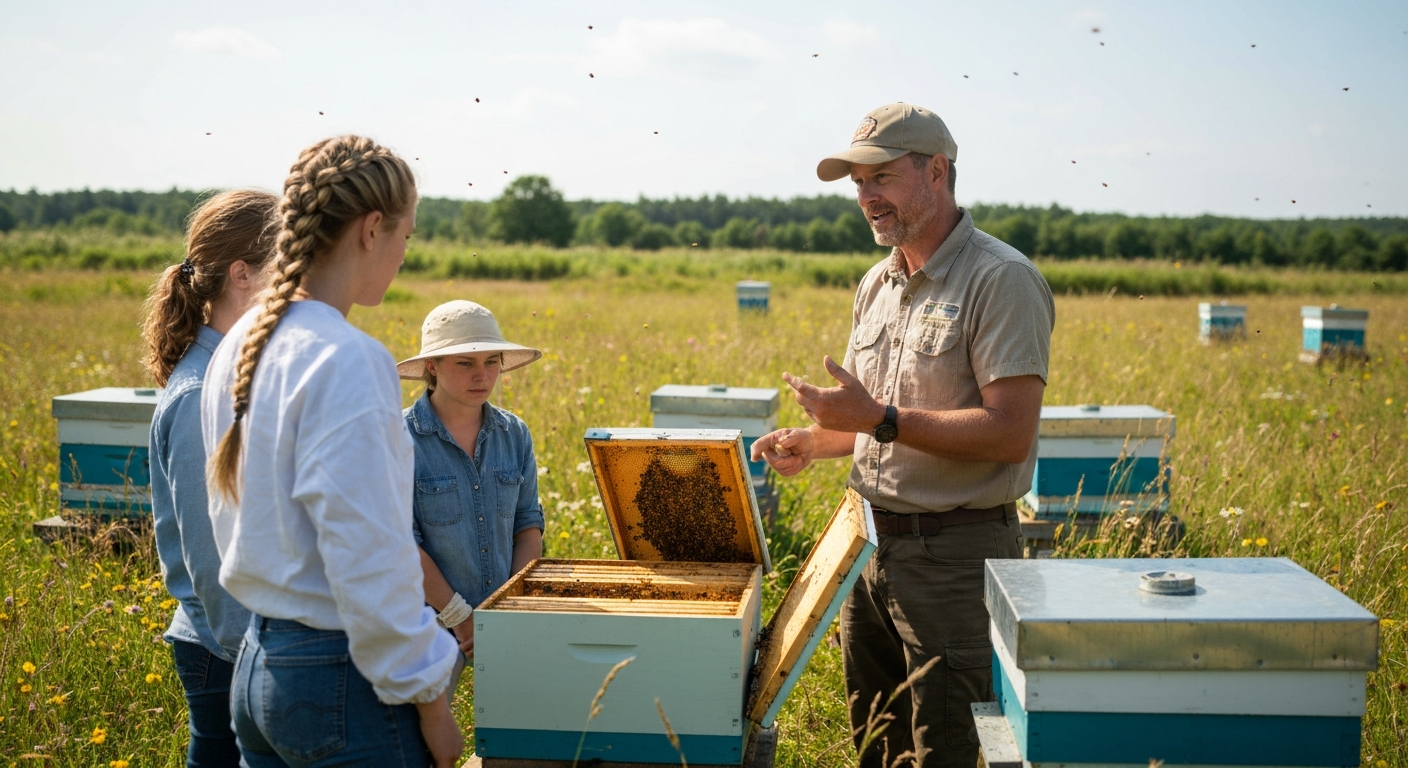
The first workshop I ever ran was for six people in my backyard, and I charged forty dollars a head. I was nervous the whole morning, convinced I didn’t know enough to teach, that participants would ask questions I couldn’t answer, that someone would get stung and it would end badly. None of that happened. Six adults spent three hours with me at the hives, asked good questions I mostly answered well, and left with more confidence about bees than they’d arrived with. Three of them went on to start hives. One of them is now in my local beekeeping association. That forty-dollar-a-head session also convinced me that teaching was something I could do, and do well enough to charge more for.
Beekeeping education is one of the more natural extensions for experienced beekeepers. You already know things that beginners desperately want to learn. You have hives and equipment that make hands-on teaching possible. And people are genuinely curious about bees — workshops sell without much marketing if they’re well-placed and properly priced.
Workshop Formats That Work
There’s no single right format for a beekeeping workshop. The best format depends on your audience, your available space, and how much depth you want to offer.
- Introduction to Beekeeping (2–3 hours): The most popular format. Suits beginners, curious gardeners, and people who’ve been considering bees for years. Includes basic biology, hive types, what the first year looks like, and a live hive inspection. Groups of 6–12 work well for this format.
- Hive Inspection Intensive (half-day): For people who already have hives or who completed an intro class. Hands-on focus — students work frames, identify queen, assess brood pattern, and practice the inspection process with coaching. Smaller groups (4–6) work better here.
- Honey Harvest Workshop: Time the workshop with your harvest, and let participants extract honey from your frames. This is the crowd-pleaser. People love the hands-on harvest experience, and you can charge a premium because participants take home a jar of honey they helped extract.
- Full-season apprenticeship: A monthly or bi-monthly series for people who want to learn by doing across a full beekeeping year. Higher price point; more commitment from both sides. Usually small groups (2–4).
Pricing Your Workshops
Underpricing is the most common mistake new instructors make. Here are realistic ranges for 2026:
- Intro workshop (2–3 hours, group of 8–12): $65–$120 per person → $520–$1,440 per session
- Hive inspection intensive (half-day, small group): $100–$175 per person → $400–$875 per session
- Honey harvest workshop (includes jar of honey): $85–$150 per person
- Full-season apprenticeship (monthly sessions, full year): $600–$1,200 per participant
Calculate your time (preparation, teaching, follow-up), your consumables (protective gear for participants, printed materials, honey jar for harvest workshops), and what similar experiences sell for in your area. Hobby cooking classes, gardening workshops, and farm tours in comparable markets often run $60–$150 per person — beekeeping should be at the higher end of that range given the specialized nature of the skill.
Where to Sell Workshop Spots
- Eventbrite or similar platforms: Easy ticketing, handles payment, and gives you a URL to share.
- Your local farmers market: A sign-up sheet or business card at your honey booth generates registrations from exactly the right audience — people already interested in artisan food production.
- Local beekeeping association: Some chapters actively promote local workshops to their members and to the public.
- Instagram and local Facebook groups: Beekeeping generates natural visual content — photos and short videos of your hives and harvest promote themselves.
- Local extension office partnerships: Extension services sometimes host or co-promote workshops by vetted local producers. It adds credibility and access to their audience.
Managing the Logistics
Group size matters for both safety and learning. For hands-on hive work, I wouldn’t go beyond twelve students per instructor. Eight is the sweet spot — everyone can see clearly, everyone gets time at the hive, and sting incidents (which do happen) can be managed without chaos.
Require informed consent and allergy disclosure. Before anyone comes near your hives, they should sign a liability waiver that acknowledges beekeeping involves sting risk and that you’ve disclosed this. Provide gloves and a veil for every participant, even if they say they don’t need one. You don’t want someone stung in the face because they thought their hat was sufficient.
Always have an epinephrine auto-injector (EpiPen) on-site and know how to use it. Ask participants about bee sting allergy during registration. This isn’t paranoia — it’s basic risk management that also signals to participants that you run a professional operation.
Workshops as a Marketing Funnel
The secondary benefit of workshops isn’t the revenue from the workshop itself — it’s the customer relationships you build. Workshop attendees who go on to start hives need equipment, support, and bees. If you sell nucs or packages, they’ll buy from you. If you sell honey, they’ll buy from you, and they’ll tell their friends why your honey is worth the price. Teaching builds community, and community builds a durable small business around your apiary in a way that market tables alone cannot.
Start small — one or two workshops this season — and learn what format your audience responds to. The curriculum gets sharper each time you run it, and word-of-mouth from good workshops fills the next ones without paid advertising.