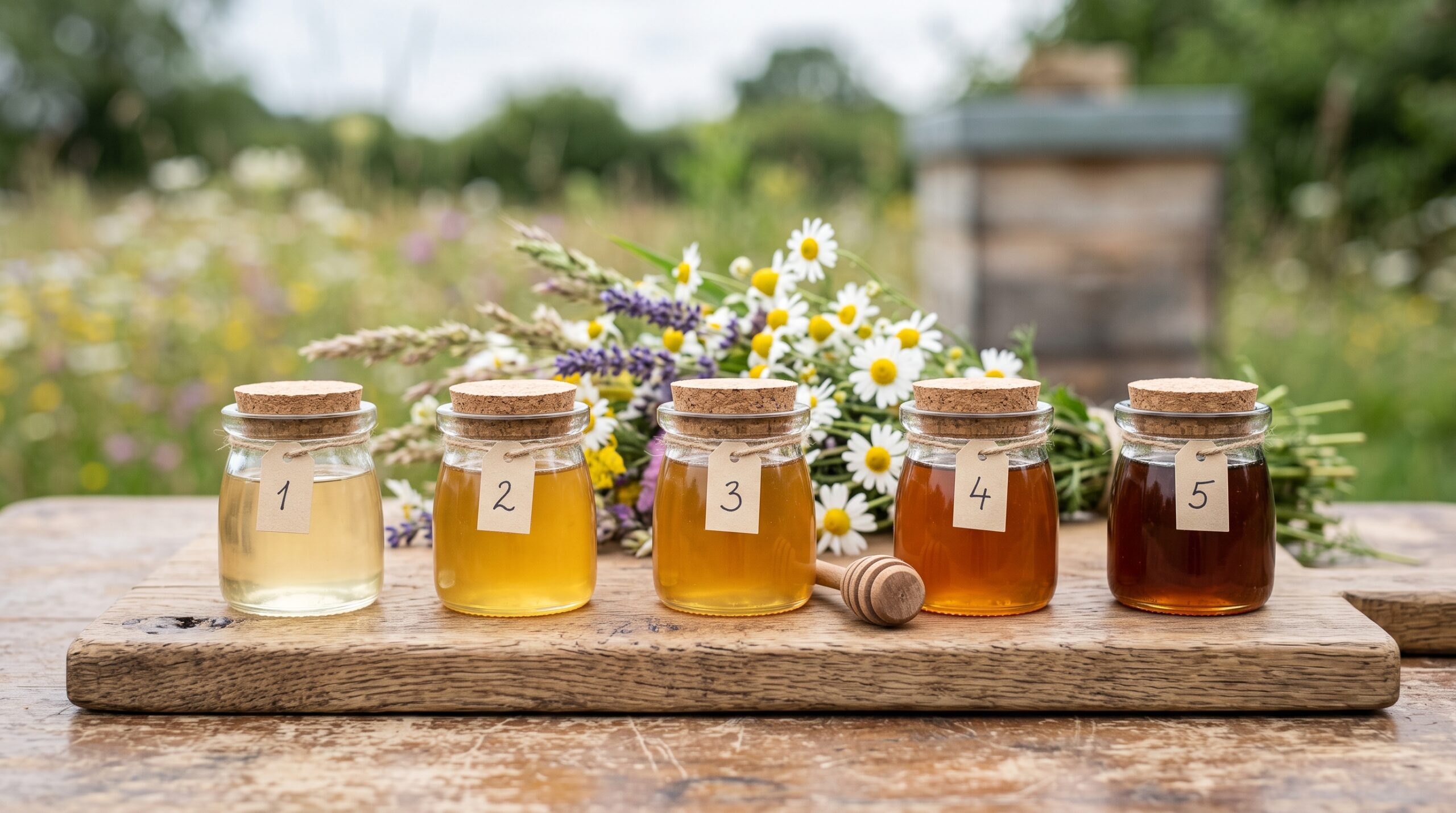
Anyone who’s only tasted commercial clover honey from a grocery store squeeze bear has no idea what honey actually tastes like. That’s not an exaggeration. Commercial honey is typically blended from dozens of sources across multiple countries, ultra-filtered to remove pollen, and sometimes adulterated — and the result is a vaguely sweet product that tastes like nothing in particular. Truly local, varietal honey from a single source is something else entirely. Tupelo honey from the panhandle swamps of Florida. Buckwheat honey from the Upper Midwest. Orange blossom from California’s Central Valley. Sourwood from the southern Appalachians. Each is unmistakable once you’ve tasted it.
This variation has a name borrowed from wine culture: terroir. And understanding it changes how you think about your own honey — and how you talk about it to customers.
What Terroir Means for Honey
In winemaking, terroir refers to the combination of soil, climate, topography, and variety that gives a wine its distinctive character. For honey, the concept is similar but the mechanism is more direct: bees collect nectar from whatever is flowering within their foraging range (typically 1–2 miles from the hive), and that nectar’s composition — its sugar ratios, amino acids, aromatic compounds, enzymes, and mineral content — becomes the honey.
There’s no processing step that smooths out these differences. The flavor of the nectar is the flavor of the honey, modified only by water evaporation and enzymatic activity in the hive. Which means honey from your apiary literally tastes like your local landscape during the nectar flow that produced it. That’s not marketing copy — it’s biology.
The Main Variables in Honey Flavor
Floral source: The single biggest determinant. Different nectars contain different aromatic volatile compounds, amino acids, and flavonoids that survive into the finished honey. Linden (basswood) honey has a distinctive minty coolness. Manuka from New Zealand has an herbal, almost medicinal depth. Wildflower honey shifts character year to year as different plants bloom in different proportions depending on weather. Single-source honeys produced when a dominant flow blocks all others are the most consistent and marketable.
Geography and climate: Even the same plant species produces nectar with different chemical profiles depending on soil mineral content, temperature during flowering, and rainfall. Buckwheat honey from New York tends to be more molasses-dark and intensely flavored than buckwheat from Ohio — the same crop, different expression. I’ve noticed this in my own operation: the same hives moved to different yard locations produce measurably different honey in color and intensity.
Processing: Honey that’s overheated during extraction or filtered ultra-fine loses volatile aromatics. The flavor compounds you want are the same ones that evaporate first with heat. Low-temperature extraction and minimal handling preserve them. This is one of the most practical arguments for raw, minimally processed honey — it tastes better, not just theoretically healthier.
Age and crystallization: Fresh honey has more pronounced volatile top notes. Aged honey can develop deeper, more complex flavors as certain reactions continue slowly over time. Some honeys — particularly darker varietals like buckwheat or avocado — are considered better with some age. Others, like delicate floral honeys, are best consumed within the first year.
Understanding Your Own Honey’s Flavor
To really understand what’s going into your hive, you need to know what’s blooming in a two-mile radius during each nectar flow. A few practical approaches:
- Keep a bloom journal. Note what’s flowering each week — fruit trees, wildflowers, agricultural crops, invasive species like autumn olive or Japanese knotweed. Then correlate with your hive weight data (if you have a hive scale) to identify which blooms produce significant nectar flows.
- Taste during extraction. Fresh honey straight from the extractor often has the most vivid flavor. Sample from different supers or different yards. The differences are often striking.
- Pollen analysis (melissopalynology). For commercial applications, you can send honey samples to labs that identify pollen types under a microscope. This tells you definitively what plants contributed to a given jar. Some farmers market customers are genuinely interested in this level of provenance.
Communicating Terroir to Customers
When I sell at markets, I always have a tasting station. Letting people taste side by side — spring honey vs. fall honey from the same yard, or honey from two different yards — is the fastest way to convey what makes local honey worth its price premium.
Simple language works best: “This is from our spring flow, mostly fruit tree blossoms and dandelion — lighter, floral, good on yogurt.” “The fall honey has goldenrod and aster in it — darker, more robust, better with cheese or in tea.” You don’t need to explain pollen chemistry. Just describe the flavor in terms people can connect with food.
Why Your Honey Won’t Taste the Same Every Year
This surprises some customers and worries others. A spring that runs cold and wet into May delays fruit tree bloom and gives clover an earlier start. A drought summer collapses the goldenrod flow. A mild fall extends the aster bloom. Your honey’s flavor shifts with the season, because it’s a faithful record of what bloomed and how strong the flow was.
For commercial producers who need consistency, this is a problem they solve with blending. For small-scale beekeepers, it’s an advantage: every batch is genuinely distinct. Vintage honey, not interchangeable commodity. Lean into that when you’re talking about your product — it’s one of the few things about your honey that can’t be replicated at scale.
The bees are tasting your landscape so you can taste it too. That’s a remarkable thing, and worth savoring slowly.