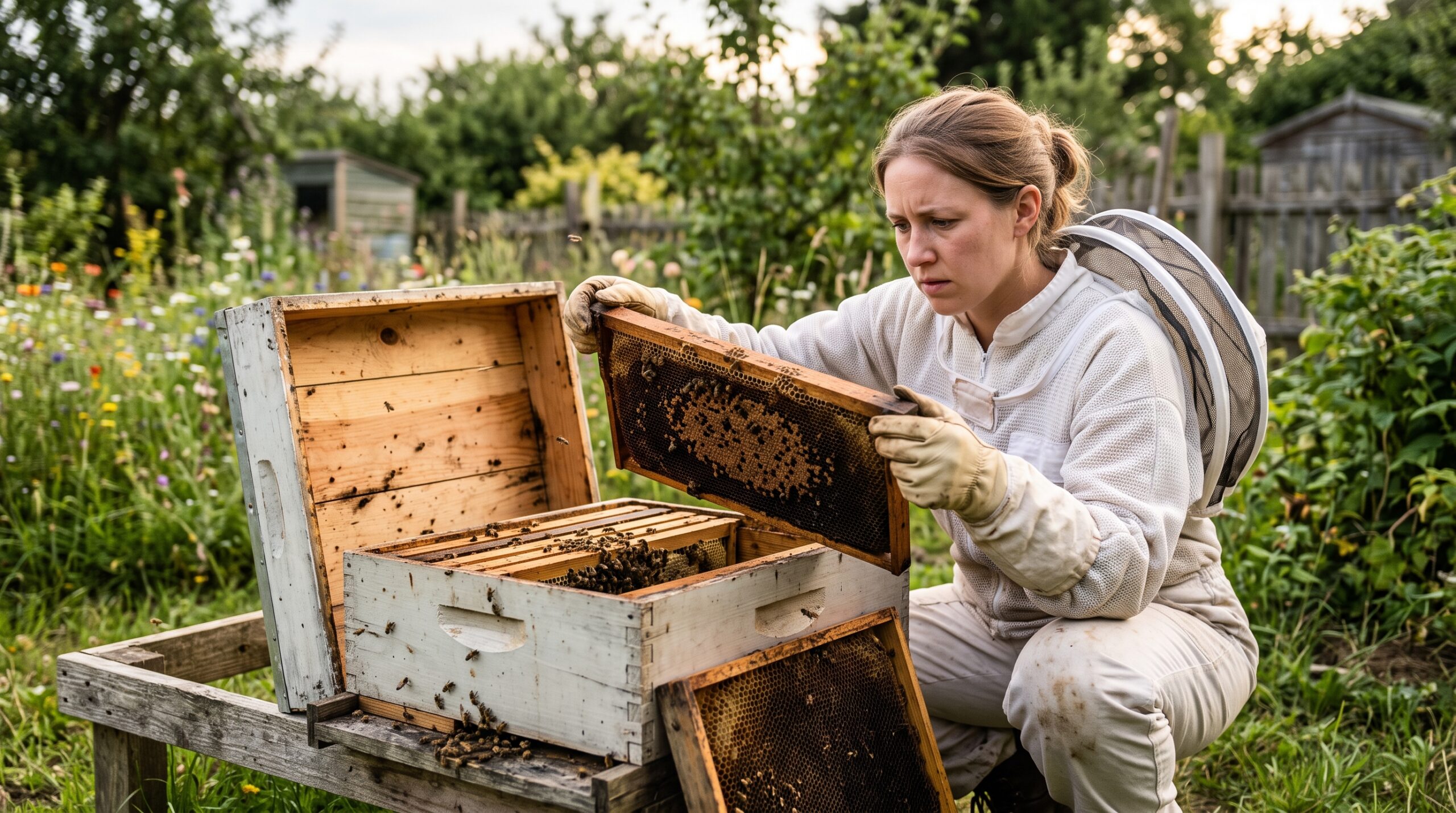
I made most of these mistakes myself. A few of them I watched other people make, and a couple I’ve heard repeated often enough at club meetings that they’ve earned a spot on the list. These aren’t obscure edge cases — they’re the things that actually trip up first-year beekeepers, and most of them are preventable once you know to look for them.
1. Opening the Hive Too Often (or Not Often Enough)
New beekeepers tend toward one of two extremes. The anxious ones open the hive every few days, disrupting the colony constantly — bees lose time, temperature, and propolis seals every time you open the box. The hands-off ones wait six weeks between inspections and miss a swarm, a laying worker, or an early disease outbreak.
The right cadence in the active season is every seven to ten days during buildup, every ten to fourteen days once the colony is established. That’s frequent enough to catch problems early and infrequent enough to let the bees work. Mark it on your calendar and stick to it.
2. Ignoring Varroa Until It’s Too Late
Varroa destructor mites are the leading cause of colony death in managed hives. They’re in virtually every hive in North America. Left unmanaged, a mite population grows exponentially through the season and crashes the colony — usually in fall or winter, when the damage is already done.
In my first year, I assumed healthy-looking bees meant healthy bees. They weren’t. Do a sugar roll or alcohol wash mite count in June, again in August, and again in late September. If mite levels exceed two mites per hundred bees (the threshold varies slightly by source, but two is a reliable alert), treat. Oxalic acid, ApiLife VAR, Mite Away Quick Strips — there are options. But treating requires knowing the mite count, which requires counting. Don’t skip this.
3. Not Feeding a New Package
A new package starts with no comb, no stored food, nothing but three pounds of bees and a caged queen. Without supplemental feeding, they may not draw enough comb to establish the colony before a dearth hits. Feed one-to-one sugar syrup from installation until a solid nectar flow is evident. If in doubt, keep feeding. The bees will ignore the feeder once they’re getting enough natural nectar.
4. Treating the First Swarm as a Disaster
When half your bees leave in a big buzzing cloud, it feels like losing the colony. You haven’t. Swarms are natural reproduction — the old queen leaves with workers, but the remaining bees are raising new queens and will continue as a colony. A swarm from a strong colony often doesn’t seriously reduce its honey production for the season.
What you should do after a swarm: find the swarm, catch it if you can (free bees for a new hive), and inspect the original colony in ten days to confirm a new queen is developing or has started laying. Panic doesn’t help. Observation does.
5. Misreading Defensive Behavior as Aggression
Bees clustering on your gloves, following you after you close the hive, or bouncing off your veil are not “aggressive” bees — they’re defensive bees responding to a disruption. First-year beekeepers sometimes label a colony as aggressive and either give up on it or replace the queen unnecessarily based on normal defensive response triggered by poor technique or bad conditions.
Before concluding a colony is genuinely mean, audit your approach: Did you inspect on a cold, cloudy day? Were you moving too quickly? Was the hive recently disturbed by a skunk or raccoon? Improve the conditions first. If the colony is still unusually defensive in good conditions over multiple inspections, then consider requeening.
6. Stacking Too Many Boxes Before the Colony Is Ready
More space sounds like a gift to bees but can actually harm a new colony. A small colony in a large space has trouble maintaining temperature, more area to defend from pests, and may draw comb poorly in unused space. Add space as the colony fills what it has — when seven of ten frames are covered with bees and drawn comb, add another box. Not before.
7. Buying Cheap Equipment That Fails
Thin-walled hive bodies warp and become difficult to close properly. Poorly made frame wire sags, leading to crooked comb. Cheap veils develop gaps or allow contact with your face. The cost difference between quality and bargain equipment is usually $30–$80 on a full kit — not trivial, but the frustration and replacement costs from failing equipment are worse. Buy mid-range or better gear once and use it for decades.
8. Forgetting to Record What You See
After your fourth or fifth inspection, you will not remember what the brood pattern looked like in inspection two, or whether you saw eggs last time, or what date you last treated for mites. Keep a simple log — date, weather, queen evidence, any concerns, what you did. A notebook, a phone app, whatever you’ll actually use. When something goes wrong, you’ll be grateful for the record. When something goes right, you’ll know what to repeat.
9. Giving Up After the First Loss
A significant number of first-year colonies don’t make it through their first winter. That’s an uncomfortable truth about beekeeping. A lost hive doesn’t mean you’re bad at this — it means you’re learning a skill that takes years to develop. The beekeepers I know who have thriving apiaries today mostly have stories of difficult first years, lost colonies, and hard lessons. They kept going.
Do the post-mortem: look at what was in the hive, try to understand what happened. Was it starvation? Low mite counts that spiked in fall? Queenlessness that went undetected? The lesson from a lost colony is usually more valuable than anything you learn from a healthy one. Take it, order new bees, and try again.