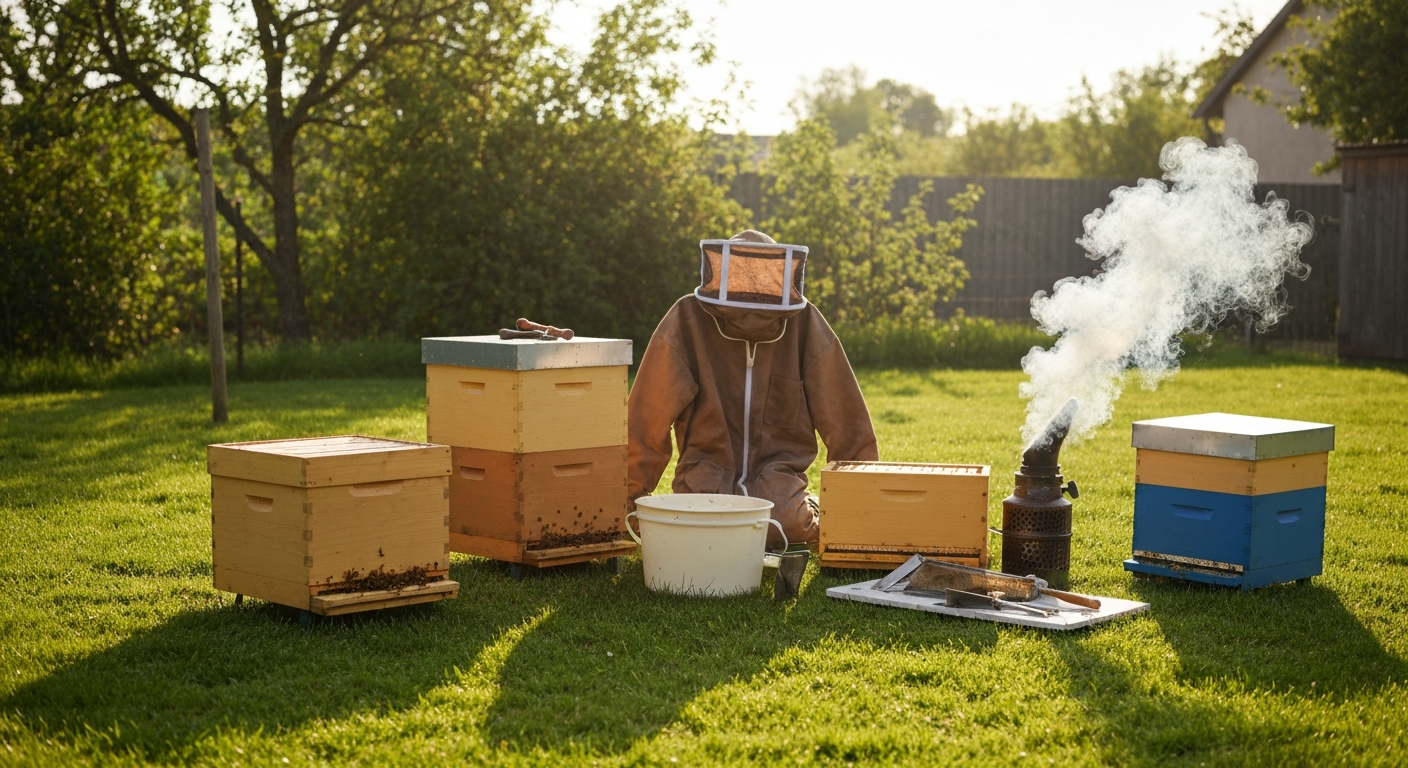
When people ask me how much it costs to start a beekeeping business, I give them two numbers: the number you need to get started, and the number you’ll actually spend once you catch the bee bug and start expanding before you’ve produced your first jar of honey. They’re usually quite different.
The good news is that a small apiary business — five to ten hives, selling at local markets, maybe adding pollination services — can be started for under three thousand dollars if you’re strategic. The bad news is that “strategic” requires resisting a lot of temptation, because beekeeping gear is genuinely fun to buy and the equipment catalogs make everything look essential.
Year One Startup Costs: 5 Hives
These are 2026 prices from mid-Atlantic and Southeast US suppliers. Your region may vary by 10–20%.
Hive equipment (per hive, Langstroth 10-frame):
- Bottom board: $20–$35
- Two deep brood boxes: $60–$90 (assembled) or $40–$60 (unassembled)
- Medium honey super (×2 per hive): $35–$50 each
- Frames with foundation (per box, 10-count): $25–$45
- Inner cover and telescoping outer cover: $25–$40 combined
- Per-hive total (assembled, new): ~$250–$350
- Five hives total: $1,250–$1,750
You can cut this significantly by buying used equipment from retiring beekeepers, checking your local association’s classifieds, or buying unassembled. Buying used requires inspecting for American Foulbrood (char marks, scale in cells, rope test) — never buy used equipment without thorough inspection. But good used equipment can cut your hive costs in half.
Bees (per hive):
- 3-lb package with mated queen: $170–$220 (2026 pricing, up significantly from 2023)
- 5-frame nucleus colony (nuc): $220–$280 — more expensive upfront but typically establishes faster
- Five packages/nucs total: $850–$1,400
Protective gear (one-time, personal):
- Full suit with integrated veil: $80–$160
- Gloves (leather or nitrile, multiple pairs): $20–$40
- Boots: Use what you have, or $30–$80 for dedicated waterproof boots
Tools and equipment:
- Smoker: $30–$70
- Hive tool(s): $10–$25
- Bee brush: $5–$15
- Uncapping knife or roller: $25–$60
- Honey extractor (manual, 2-frame): $180–$280 (or borrow from your local association first)
- Bottling tank / honey gate: $40–$80
- Straining screen: $20–$40
- Scale (for weighing filled jars): $30–$50
First-year consumables:
- Jars (48-count case of 1-lb hex jars): $35–$55
- Labels (custom printed, 100-count): $25–$60 depending on design complexity
- Feeder syrup supplies (sugar): $15–$40 first year
- Mite treatments (Oxalic acid dribble or ApiGuard): $25–$50
Business setup (one-time):
- LLC filing (optional first year): $50–$500 depending on state
- Business license and seller’s permit: $0–$100 depending on municipality
- Farmers market application fee: $0–$50 for application; $20–$60/day booth fee or $200–$800/season
- Commercial general liability insurance: $150–$400/year for small apiaries
Total First-Year Estimate
- Conservative (used equipment, careful buying): $1,800–$2,500
- Moderate (mix of new and used, manual extractor): $2,500–$3,500
- Fully new, first-class setup: $4,000–$6,000+
First-Year Revenue Reality
Five healthy hives in a good nectar region might yield 20–40 pounds of honey per hive in year one — but only if conditions cooperate. A more conservative expectation is 10–20 pounds per hive the first season as colonies establish. That’s 50–100 pounds total, which at $14/lb retail yields $700–$1,400 gross revenue.
Year one will almost certainly not be profitable. That’s normal and expected. The investment in equipment is front-loaded, and your bees need a full season to get established. Most small apiaries don’t turn a profit until year two or three, when equipment costs are amortized, colonies are established and expanding, and your market presence is known.
What You Can Skip at First
- A powered extractor: Borrow from your association or use a manual one. A motorized extractor is a year-two purchase when you know your operation is viable.
- Custom printed labels at launch: Start with a simple printed template and upgrade when you know your branding.
- An LLC before you have revenue: Understand the liability question first; a good insurance policy may protect you adequately while you’re starting small.
- Fancy queen rearing equipment: Not relevant until you’re scaling beyond ten hives.
Starting lean, learning the craft, and expanding from a profitable base is the approach that produces durable apiary businesses. The beekeepers I know who burned out or gave up in years one or two almost all overspent on equipment before understanding whether they actually wanted to manage bees commercially. Start with what you need, master the basics, and add gear as your operation proves itself.