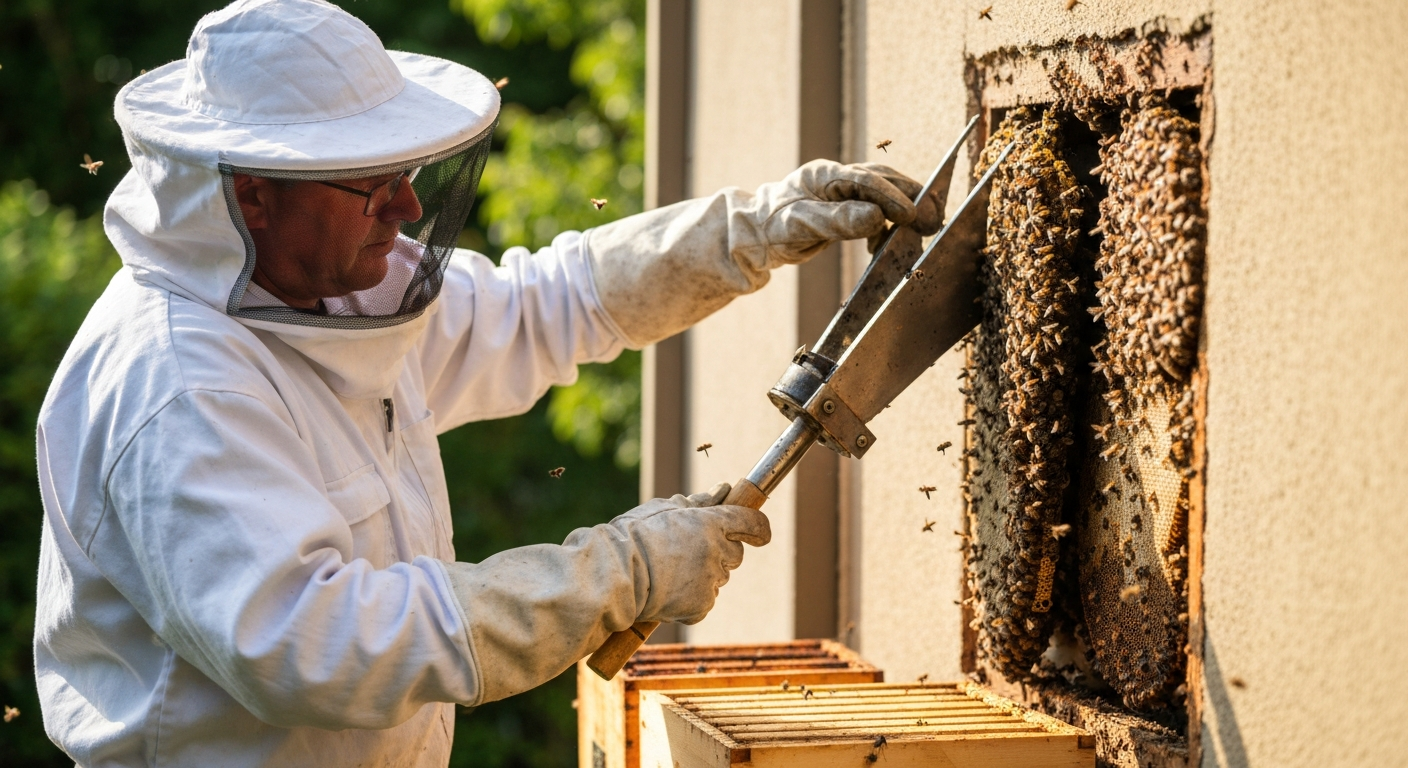
My phone rings every April. Homeowners, property managers, a city parks department once, a restaurant with bees in the eaves. They all want the same thing: the bees gone, humanely if possible, quickly if not. For the first few years I kept bees, I referred those calls to an exterminator because I didn’t feel qualified to handle removals. When a friend who does bee rescue work showed me what it actually involved, I spent a weekend learning — and started taking calls within a month.
Bee removal is a real income stream for qualified beekeepers, but the keyword is “qualified.” It requires more than beekeeping skill. You need structural understanding, the right tools, liability insurance, and honest judgment about which jobs to take and which to decline.
Types of Removals
Not all bee removal jobs are equal. Understanding the types helps you price, prepare, and decide whether to take a job.
- Swarm capture: The easiest and most enjoyable. A swarm is a cluster of bees on a branch, fence post, or outdoor surface — accessible, no structure involved. You provide a box and wait for them to move in, or brush them in directly. Usually free or low-cost to the property owner; you gain a colony. Takes 30 minutes to an hour.
- Cut-out: Bees are established inside a structure — wall void, soffit, chimney, floor joist space. This requires opening the structure, removing comb, capturing the colony, and often doing minor repairs (or coordinating with a contractor). This is where the real money and the real risk live.
- Trap-out: The colony is inaccessible (between floors, deep in masonry). You install a one-way excluder and a bait hive. Over weeks, the bees move into your hive; the queen eventually follows or the colony fails. No demolition required, but it’s slow (2–6 weeks) and not always successful.
- Exterminator follow-up: Someone else killed the bees but left comb in the wall. Rotting honey and wax attract pests and can damage the structure. You’re hired to remove the dead colony and comb — messy, but often straightforward once the structure is opened.
What You Need to Do Removals
Beyond your standard beekeeping gear, cut-out removals require:
- Reciprocating saw (for cutting drywall or wood)
- Pry bars and drywall tools
- Shop vac with a bee-safe modification (live bee vac)
- Extra ventilated boxes for transport
- Ladder and/or scaffolding for elevated work
- Comb catcher or rubber bands for re-hiving cut comb
- Tarps and drop cloths
- Camera for before/after documentation
You’ll also need clear agreements with property owners about what you will and won’t repair. Most removal specialists say they remove bees and comb but the structural repair is the property owner’s responsibility — they hire a contractor afterward.
Pricing Removals
Swarms: Often free, or $50–$100 if it requires a ladder or some difficulty. You gain a free colony; that’s your compensation.
Cut-outs: $200–$600 or more depending on accessibility, structure type, colony size, and your region. An easy soffit removal takes two hours. A colony embedded in a double-cavity masonry chimney can take a full day and still fail.
Trap-outs: $150–$300 setup fee plus equipment rental or loss, given the weeks-long commitment.
Charge for your time and equipment regardless of whether you recover a usable colony. The colony is a bonus, not the compensation. Price the job at what it’s worth to do the work, and treat any bees you save as profit on top.
Liability and Insurance
This is where most new removal operators underestimate their risk. If you open a wall and damage something — electrical wiring, a pipe, a structural element — you’re liable. If a homeowner or neighbor gets stung during removal and has an allergic reaction, you may face a claim.
Before offering removal services commercially:
- Get commercial general liability insurance that specifically covers bee removal work. Not all policies do — confirm with your insurer.
- Use written agreements that define scope of work, what’s excluded, and property owner responsibilities.
- Never promise the colony will be successfully saved — you can’t always know until you’re inside the wall.
- Check whether your state requires any license or registration for pest/wildlife removal services. Some do.
Is It Worth It?
For beekeepers who enjoy structural problem-solving and direct client interaction, yes — bee removal can pay $300–$600 or more per job, generate free colonies, and create strong word-of-mouth referrals. It’s not passive income, and the worst jobs are genuinely unpleasant (a colony dead for two months in a Georgia summer wall is an experience I won’t describe in detail here). But the best jobs are genuinely satisfying — you rescue a live colony, help a homeowner, and add productive hives to your apiary.
Start by shadowing an experienced removal specialist before taking jobs independently. The skills transfer quickly; the judgment about when to say “I can’t safely do this one” takes longer to develop, and it’s the most important skill of all.