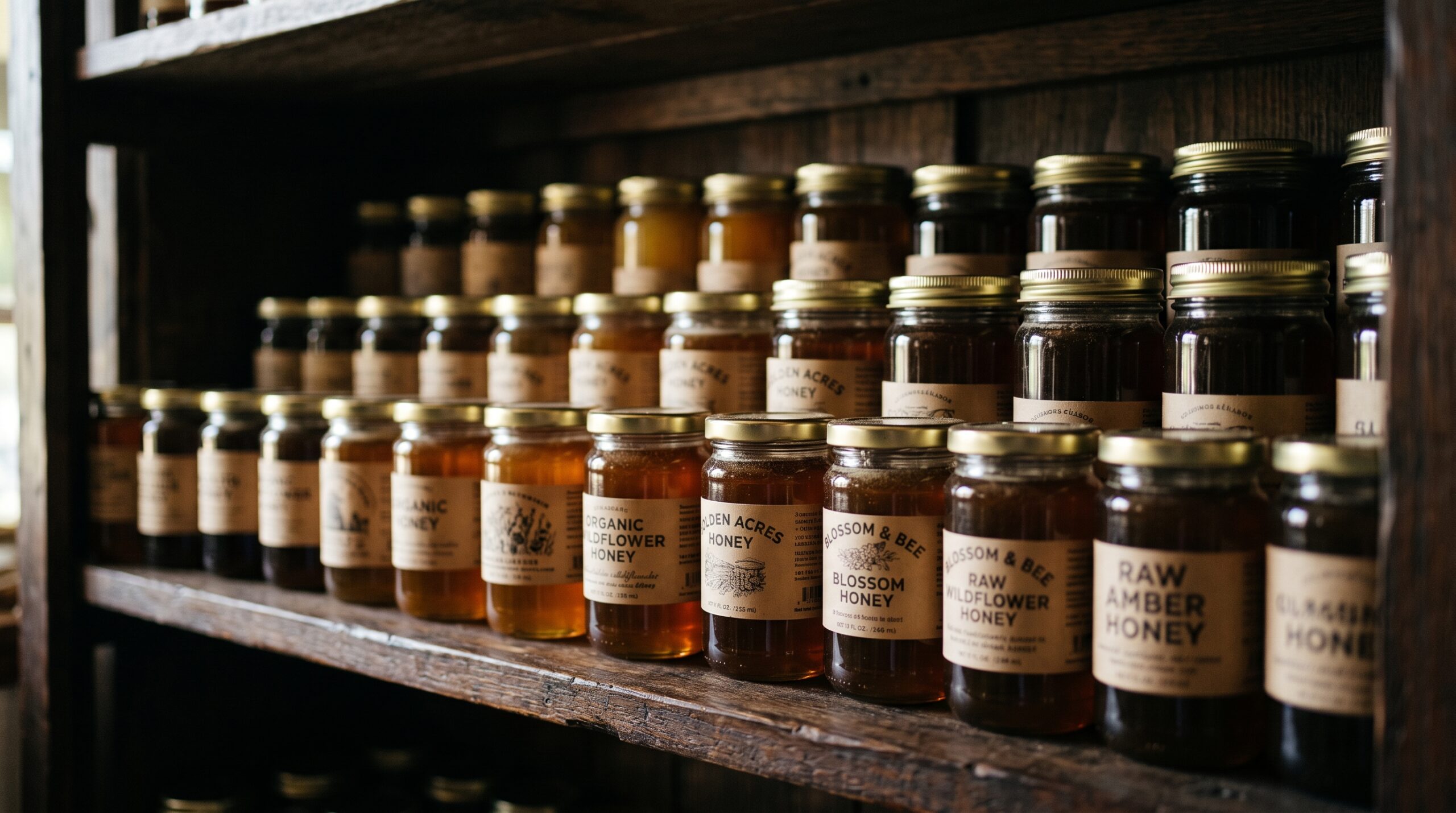
Honey is one of the few foods with a legitimate claim to near-indefinite shelf life. Archaeologists have found 3,000-year-old honey in Egyptian tombs that was still theoretically edible. That’s not a myth — it’s a function of honey’s chemistry: low water content, high sugar concentration, low pH, and naturally occurring hydrogen peroxide created by the enzyme glucose oxidase all work together to prevent microbial growth. But “theoretically indefinite” and “keeps well in your pantry for decades” aren’t quite the same thing, and how you store honey makes the difference.
I’ve had jars of my own honey age for six or seven years with no loss of quality. I’ve also watched poorly stored honey go off in less than a year. The variables are moisture, heat, light, and the container. Get those right, and you’re set.
Water Content Is the Foundation of Everything
If there’s one thing to understand about long-term honey storage, it’s that water content determines whether honey will ferment. Honey with a water content below 17% will not ferment under any reasonable storage conditions. Between 17–18% it’s stable in most cases. Above 19–20%, wild yeasts present naturally in honey (primarily Saccharomyces cerevisiae and its relatives) can become active and ferment the sugars — your honey turns bubbly, sour, and alcoholic.
This is why harvest timing matters so much: if you extract uncapped or unripe honey, you may already be starting with a product that won’t keep. A refractometer check before extraction is the best insurance you have. Store only honey you’ve confirmed is below 18.5%.
The Right Container
Glass is the gold standard for honey storage. It doesn’t absorb odors, doesn’t leach anything into the honey, and you can see what’s happening inside. Wide-mouth mason jars are practical; purpose-made honey jars are better for selling. Either way, make sure lids seal tightly.
Food-grade plastic (HDPE, marked with a #2 or #5 recycling symbol) works for short-to-medium-term storage — one to two years. Over longer periods, some plastics can impart subtle off-flavors, and plastic is more permeable to moisture than glass. For anything you plan to keep beyond two years, use glass.
Avoid metal containers unless they’re specifically designed for honey (stainless steel is fine; galvanized or tin-lined containers can react with honey’s acidity over time). Never use containers that previously held strong-smelling substances — honey is surprisingly good at absorbing ambient odors through certain materials.
Temperature and Location
Honey stores best at consistent, moderate temperatures. The ideal range is roughly 50–70°F (10–21°C). At these temperatures, crystallization happens slowly or not at all, enzyme activity is preserved, and no heat damage occurs.
- Don’t refrigerate: Refrigeration (35–40°F) accelerates crystallization dramatically. Crystallization isn’t harmful, but if you want liquid honey that stays liquid, don’t put it in the fridge. The cold also doesn’t provide any meaningful preservation benefit since honey doesn’t need refrigeration.
- Avoid high heat: Temperatures above 95°F (35°C) over extended periods degrade enzymes and drive off aromatic compounds. A jar sitting near a stove or in a hot garage in summer is losing quality slowly but steadily. A warm pantry or basement is fine; a hot attic is not.
- Consistency matters more than the exact temperature: Temperature cycling — going from warm days to cool nights repeatedly — can cause partial crystallization and re-liquefaction cycles that affect texture. A location with stable temperature is better than one that fluctuates widely.
Light and Oxidation
Direct sunlight degrades honey over time. UV light breaks down certain compounds and accelerates the formation of HMF (hydroxymethylfurfural), a marker for heat and aging damage. Store jars in a dark pantry, cupboard, or cardboard box — not on a windowsill or countertop where they look pretty but sit in the sun.
Oxygen exposure matters less than for most foods (honey’s antimicrobial properties protect it even after opening), but keep jars tightly sealed when not in use. An open jar sitting uncovered for days in a humid kitchen will absorb moisture from the air, gradually raising the water content.
Bulk Storage for Larger Operations
If you’re storing more than a few jars — say, fifty pounds or more from a good season — food-grade five-gallon buckets with gamma seal lids work well. Store them in a cool, dark space. Label each bucket with harvest date, floral source if known, and water content if you measured it. You’ll thank yourself in three years when you’re wondering what’s in that bucket in the back of the storage room.
For very large quantities, food-grade plastic drums (55-gallon, HDPE) are used commercially. At that scale, temperature-controlled storage becomes important — honey is dense, holds heat poorly in bulk, and can develop warm pockets in a poorly-ventilated room.
What About Crystallized Honey in Storage?
Crystallization is a natural process and doesn’t mean honey has gone bad. Honey that crystallizes in storage is still perfectly good — it just needs to be gently warmed to re-liquefy if you want it pourable. In my experience, crystallization actually correlates with lower water content (drier honey crystallizes faster), so crystallized honey in storage is often a good sign.
If crystallized honey develops an off smell, fermentation bubbles, or a distinctly sour taste, those are signs of fermentation rather than simple crystallization. Fermented honey is not storage honey gone bad in the usual sense — it’s the precursor to mead, and many people have made quite good mead from “spoiled” honey rather than wasting it.
Quick Reference: Storage Do’s and Don’ts
- ✓ Glass jars with tight lids
- ✓ Cool, dark, stable temperature (50–70°F)
- ✓ Label with date and moisture content
- ✗ Refrigerator (causes rapid crystallization)
- ✗ Direct sunlight or near heat sources
- ✗ Non-food-grade containers
- ✗ Storing uncapped or high-moisture honey
Follow these basics and your honey will outlast most things in your pantry. The bees made something genuinely remarkable — proper storage just lets it stay that way.