If there’s one thing I wish someone had told me in my first year of beekeeping, it’s this: varroa mites will arrive in your hive whether you prepare for them or not. The question is never if — it’s when, and whether you’ll catch it before the damage becomes irreversible. In my apiary, I learned the hard way after losing two colonies in my second winter to what I later understood was a varroa-driven collapse. The brood looked patchy, the population crashed in October, and by December the hives were empty. Classic signs, in hindsight.
Varroa destructor is a parasitic mite that feeds on developing bee pupae and adult bees, weakening them physically and acting as a vector for viruses like Deformed Wing Virus. A colony can tolerate a low mite load, but infestations grow exponentially during the summer brood cycle. Understanding the lifecycle and treatment options isn’t optional for any beekeeper who wants to keep bees alive past their first winter.
Monitoring: Know Your Mite Load Before You Treat
Treatment without monitoring is guesswork. The two most reliable methods for assessing varroa levels are the alcohol wash and the sugar roll. Of the two, I strongly prefer the alcohol wash — it’s more accurate because it kills and releases mites that the sugar roll sometimes misses.
For an alcohol wash, collect approximately 300 bees (about half a cup) from a brood frame into a jar with isopropyl alcohol. Shake vigorously for 60 seconds, then pour through a mesh lid or strainer. Count the mites in the alcohol and divide by the number of bees to get a percentage. Economic thresholds vary slightly by region and time of year:
- Spring (colony expansion): treat at ≥2% (2 mites per 100 bees)
- Summer peak: treat at ≥2–3%
- Pre-winter (August–September): treat at ≥1% — this is critical; the winter bees being raised now must be healthy
The sugar roll is gentler on bees but less reliable. Coat 300 bees in powdered sugar in a jar with a mesh lid, shake, and count mites on a white sheet. Good for a quick field estimate if you don’t want to sacrifice bees, but confirm with alcohol wash if you’re making treatment decisions.
Treatment Options: Organic vs. Synthetic
There’s genuine debate among beekeepers about which treatments are “best,” and the honest answer is that it depends on your climate, your colony’s situation, and whether there’s brood present. Here’s what I use and when.
Oxalic Acid (OA): My go-to for broodless periods — late fall and early winter here in my region. OA is highly effective against phoretic mites (those on adult bees) but does almost nothing to mites inside capped brood cells. Delivery methods include:
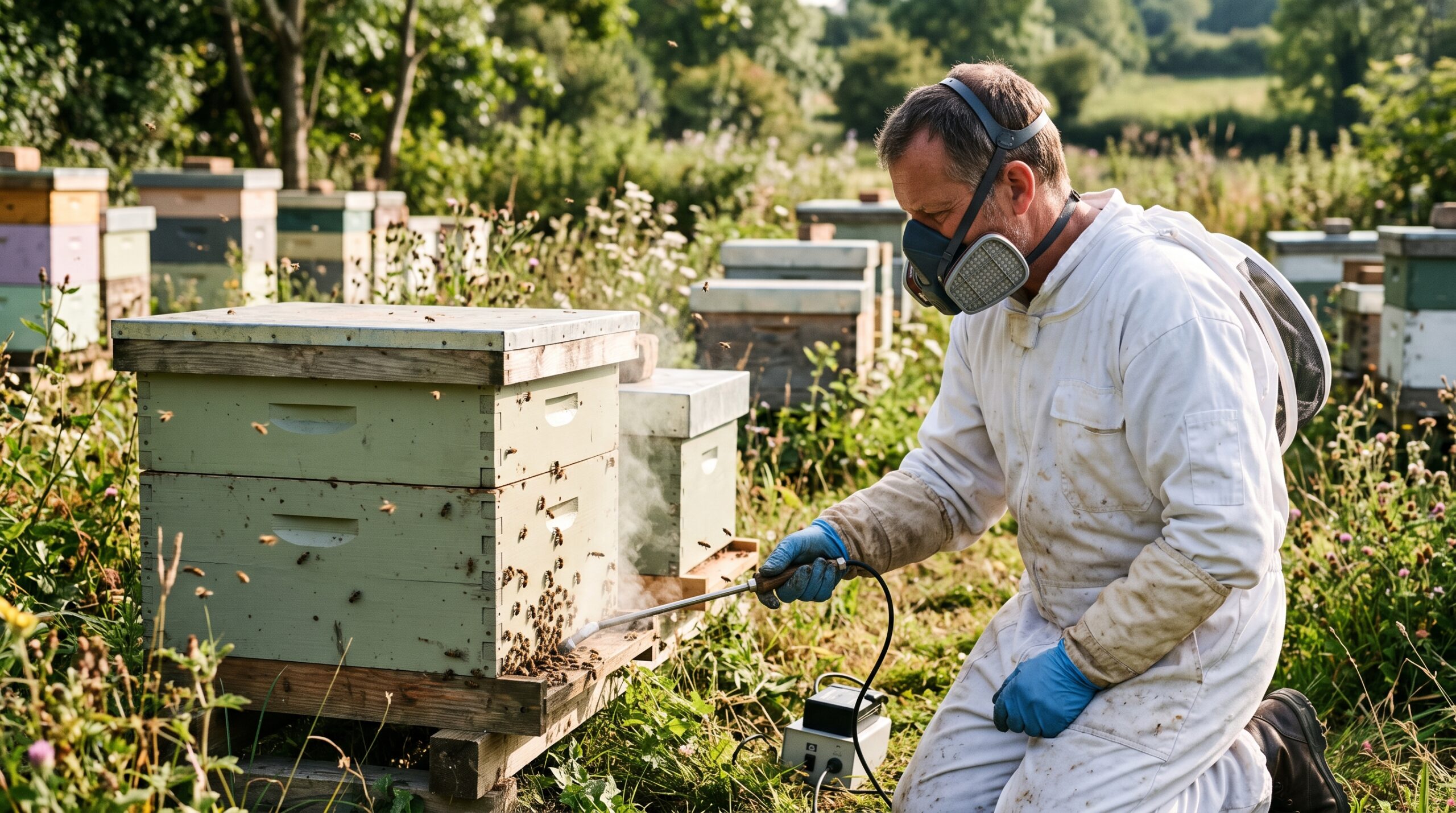
- Vaporization (sublimation): Most effective, penetrates the cluster well. Requires a vaporizer and safety gear (respirator, goggles). Three treatments 5 days apart during a broodless period achieves 95%+ efficacy.
- Dribble/trickle method: A 3.2% OA solution drizzled over the seams of bees. Effective but stressful for bees. Works in cold weather when vaporization is difficult.
- Oxalic acid shop towels (OA/glycerin): Slower-release, works with brood present. Newer and increasingly popular for summer treatment.
Formic Acid (Mite Away Quick Strips / MAQS): Works on mites under the cappings — which makes it useful when you have capped brood and can’t wait for a broodless window. MAQS are pads that release formic acid vapors. They’re effective at 35–40% mite kill in brood, but temperature-sensitive (don’t use below 50°F or above 92°F), and queen losses do occur at higher rates than with OA. I’ve had queens fail after MAQS treatment in hot summers. Use cautiously.
Thymol (Apiguard, ApiLife Var): Gel or tablet-based, needs temperatures above 59°F to volatilize properly. Good summer option when it’s warm enough. Two treatments 2 weeks apart. I’ve found efficacy variable — works well in hot dry summers, less so in cool wet ones.
Synthetic miticides (Apivar/amitraz, Checkmite/coumaphos): Highly effective but resistance is a real concern with coumaphos. Apivar strips (amitraz) remain effective in most regions and are my backup when OA treatments aren’t bringing the count down. Follow label directions exactly — removing strips too early leads to resistance faster. Never use when supers are on.
Timing Your Treatments: The Late-Summer Treatment Is Non-Negotiable
If I could give one piece of varroa advice, it would be this: treat in August, before your colony raises its overwintering population. The bees that emerge in September and October are the ones that will carry your colony through to spring. Mite-damaged winter bees have shorter lifespans and impaired immune function. A colony going into winter with high mite loads almost never makes it to March.
My annual treatment calendar:
- April (spring check): Alcohol wash. If above 2%, treat with OA/glycerin pads or Apivar.
- July–August (pre-winter treatment): Alcohol wash. Treat with Apivar strips or MAQS if above 1%. This is mandatory regardless of how low spring counts were.
- December (broodless OA vaporization): Three OA vapor treatments over 15 days to knock out any remaining phoretic mites before spring buildup.
Common Mistakes I’ve Made (and Seen)
- Treating once and assuming it’s done. Most treatments need multiple applications to work properly. One OA vaporization treatment does not solve a mite problem.
- Using temperature-sensitive treatments at the wrong time. MAQS in 95°F heat, or thymol on a cold September day — neither works and the first risks queens.
- Waiting for visual signs of mites before testing. By the time you see deformed wings or spotty brood, you’re already behind. Monitor proactively.
- Treating without removing supers. Most miticides cannot be used with honey supers present. This is a legal requirement, not a suggestion.
- Giving up on a colony mid-treatment. Pulling Apivar strips at 4 weeks instead of the full 6–8 weeks because “it seems fine” is how resistance develops.
Quick Reference: Varroa Treatment Cheat Sheet
- Broodless, cold: OA vapor × 3 treatments (5 days apart) — best winter option
- Active brood season, supers off: Apivar (amitraz strips, 6–8 weeks) or MAQS (if 59–92°F)
- Light infestation, warm weather: Apiguard or ApiLife Var (2 treatments × 2 weeks)
- Year-round baseline: OA/glycerin shop towels (slow-release, works with brood)
Varroa management isn’t a one-time task — it’s an ongoing part of keeping bees. Once you build monitoring into your routine and pick treatments appropriate to the season, the learning curve levels off quickly. Try running your first alcohol wash this week. The number you find will tell you everything you need to know about what to do next.