Deformed Wing Virus doesn’t get the same attention as varroa mites in beekeeping discussions, even though the two are directly connected and DWV is arguably the more devastating part of the varroa equation. The mites themselves weaken bees by feeding on developing pupae, but what they also do — almost always — is inject and amplify DWV into those same pupae. The virus then replicates to catastrophic titers during bee development, producing bees that never function normally. In high-varroa colonies, DWV is essentially guaranteed, and managing varroa means managing DWV by extension.
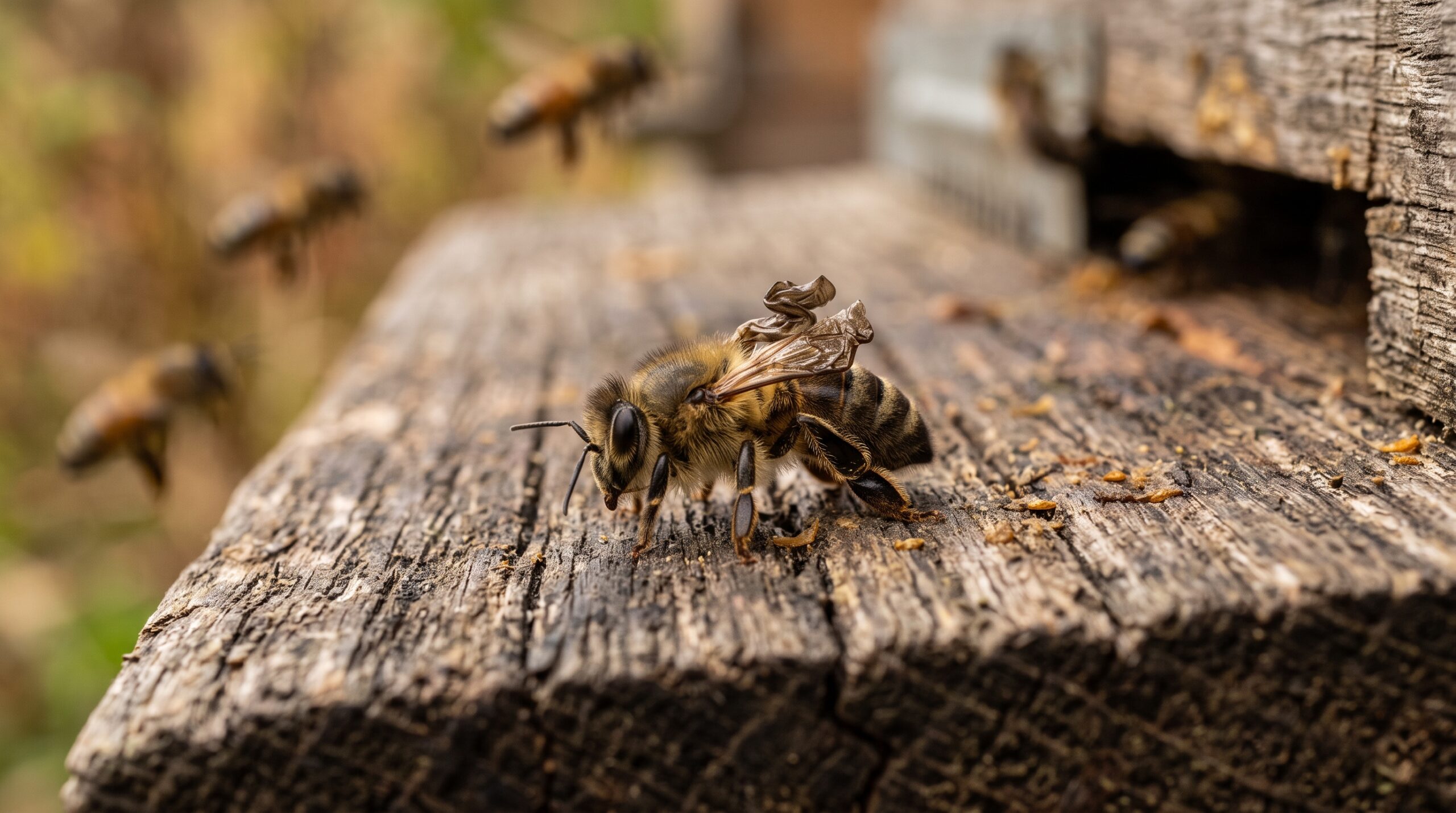
I’ve seen DWV symptoms in my apiary and the image is hard to shake: small bees emerging with wings crumpled and folded against their abdomens, unable to fly, stumbling around the bottom board and dying within days. One bee with deformed wings is sad; a hundred emerging from a single frame in late September means the colony is in serious trouble and won’t survive winter. Understanding the virus and its relationship to varroa changes how you think about mite management timing.
What DWV Is and How It Spreads
Deformed Wing Virus is a positive-sense single-stranded RNA virus in the Iflavirus family. It naturally exists at low, mostly harmless levels in honey bee populations — bees can carry the virus without showing symptoms when titers are low. The problem arises with varroa. When a varroa mite feeds on a developing pupa in a capped cell, it acts as a direct injection vector, introducing DWV directly into the bee’s hemolymph at a stage when the bee’s immune system is not yet fully functional. Mite feeding also suppresses immune gene expression, making viral replication unchecked.
The result is virus titers millions of times higher than those found in bees in varroa-free colonies. Those extreme titers cause the developmental disruption that produces deformed wings, shortened abdomens, and neurological impairment.
DWV also spreads through:
- Nurse bee-to-larva transmission via brood food
- Horizontal transmission between adult bees via trophallaxis (food sharing)
- Drone semen (DWV has been detected in drone seminal fluid, implying vertical transmission through queens)
- Robbing and drift between colonies
This means DWV can spread even without varroa present, but at low levels it rarely causes clinical symptoms. Varroa is the amplifier that turns a background infection into a colony-destroying outbreak.
Recognizing Clinical DWV
The most obvious sign is the one that gives the virus its name:
- Crumpled, shortened, or stumped wings: Newly emerged bees with wings that look wadded, creased, or barely formed. The wings may be held tightly to the body at a wrong angle or be obviously underdeveloped.
- Shortened, stunted abdomen: Infected bees are sometimes noticeably smaller than their hivemates, with a truncated-looking abdomen.
- Crawling, non-flying bees: You’ll see these bees on the landing board, on the ground in front of the hive, or on the bottom board — unable to fly, often walking in circles.
- Reduced lifespan: Even infected bees without obvious physical deformity may die significantly earlier than uninfected bees, shortening the effective labor pool of the colony.
Critically, you can have significant DWV in a colony without seeing clinically symptomatic bees — the virus exists on a spectrum. Colonies with moderate viral loads may produce apparently normal bees that simply die sooner. The clinical deformed-wing presentation indicates a very high viral burden, usually associated with a high mite load that’s been present for at least several weeks.
Why Timing Your Varroa Treatment Matters for DWV
This is the practical implication for beekeepers. DWV titers in a colony respond to varroa mite levels, but with a lag. Even after you treat varroa and knock down the mite population, bees that were already infected as pupae will emerge with symptoms for another brood cycle. It takes 3–5 weeks after a successful varroa treatment for the DWV-symptomatic bees to die off and the new, healthier generation to dominate the colony.
This is why the August/early September treatment window is critical. The bees raised in September and October are your winter bees. They need to emerge from healthy pupae — meaning the mites that would infect them must be eliminated before those pupae are capped. If you treat in late October, you’ve already lost those winter bees to DWV exposure. They’ll be shorter-lived, immune-compromised, and less able to sustain the winter cluster.
Genetic Resistance and the Future of DWV Management
There is promising research into bee lines with increased DWV resistance and better hygienic responses to varroa-infested brood. VSH (Varroa Sensitive Hygiene) queens produce workers that detect and remove varroa-infested pupae, which directly limits DWV amplification by reducing the number of completed mite reproductive cycles. Bees selected for low DWV titers under high mite pressure exist in some research programs.
For practical beekeepers, using VSH or hygienic queens from reputable breeders reduces your varroa-DWV burden and may eventually be part of a sustainable resistance approach. But for now, rigorous varroa monitoring and timely treatment remain the primary control strategy for DWV.
Quick Reference
- Cause: Deformed Wing Virus (RNA virus, Iflavirus family)
- Primary vector: Varroa destructor mites feeding on pupae
- Symptoms: Crumpled wings, stunted abdomen, crawling non-flying bees at entrance
- Real problem: Invisible DWV load shortening all bees’ lives, not just clinically symptomatic ones
- Control: Varroa management — no direct DWV treatment exists
- Critical timing: Treat mites before late-August brood is capped to protect winter bees
The takeaway is this: when you manage varroa, you’re managing DWV. They’re inseparable in practical beekeeping. If you’re running low mite counts year-round through monitoring and timely treatment, DWV stays at subclinical background levels and your colonies stay healthy. Let mite counts run high through summer — especially July and August — and DWV will take your winter bees, even if you treat in October. The virus is the reason “a little varroa” isn’t actually fine.