You walk out to the apiary on a warm morning and find a carpet of dead and twitching bees in front of one hive. The day before, the colony looked strong. Few things are as alarming for a beekeeper, and few are as easy to misread. Pesticide poisoning, starvation, cold snaps, robbing and disease can all leave dead bees at the entrance, but they leave different clues.
This guide walks through the typical signs of pesticide exposure in honey bees, how to tell it apart from other causes, what to do in the first hours after you find a die-off, how to report it, and the practical steps that lower the risk in the first place.
How bees get exposed to pesticides
Honey bees forage over a wide area around the apiary, often well beyond what you can see from your hives. Along the way they can contact pesticides in several ways:
- flying through spray drift while a crop, lawn or roadside is being treated;
- foraging on flowering plants, including weeds in the understory of an orchard, that were sprayed while bees were active;
- collecting contaminated pollen or nectar and bringing it back to the hive, where nurse bees and brood are exposed;
- drinking from puddles, irrigation runoff or containers that hold residues;
- picking up dust released when treated seed is planted.
Insecticides are the usual suspects because they are designed to kill insects, but some fungicides and tank mixes can also harm bees or increase the toxicity of other products. Exposure can come from farms, but it can also come from mosquito control, garden centers, golf courses and backyard spraying in your own neighborhood.
Signs that point to pesticide poisoning
No single symptom proves poisoning. What you are looking for is a pattern, especially one that appears suddenly in a colony that was healthy days earlier.
At the entrance
- A large number of dead bees appearing in front of the hive within a day or two, much more than the normal trickle of old foragers.
- Bees crawling on the ground, unable to fly, sometimes spinning in circles or on their backs.
- Trembling, twitching or paralyzed bees, often with wings held at odd angles.
- Bees with their tongues extended, a sign seen with some nerve-acting insecticides.
- Several hives in the same yard affected at once, particularly the strongest foraging colonies.
Inside the hive
- A sudden drop in the forager population while the queen, brood and nurse bees remain.
- Dead or abnormal brood if contaminated pollen was stored and fed to larvae.
- In some cases, a colony that seems fine at first but dwindles over the following weeks as exposed nurse bees and brood are lost.
Timing clues
Note what happened nearby in the previous days. Was a field mowed and sprayed, a mosquito truck seen on your street, a crop in bloom next to a treated one? Poisoning often lines up with a specific application, and remembering the date and wind direction can be important later.
Ruling out other causes
Before concluding that pesticides are to blame, consider the other common reasons for a pile of dead bees. Getting this right matters, because the response is very different.
- Robbing: look for fighting at the entrance, torn wax cappings on the landing board and frantic flight. Dead bees from robbing are usually mixed with live bees wrestling each other.
- Starvation: colonies that run out of food die slowly. You will typically find many bees head-first in empty cells and no capped honey near the cluster.
- Cold or chilled bees: after a sudden cold snap, bees that could not return to the cluster may die at or near the entrance. This usually happens in spring or fall, not on warm days.
- Disease and parasites: heavy varroa loads, viruses such as deformed wing virus, and nosema can all cause crawling bees and losses. These tend to build over weeks and show other signs, like deformed wings or patchy brood.
- Normal turnover: a strong colony loses a lot of old bees every day in peak season. A modest number of dead bees, especially after a few rainy days when undertakers could not fly them away, is not necessarily a problem.
If the die-off is sudden, involves many foragers, shows trembling or paralysis, and happened during warm, active weather, pesticide exposure moves to the top of the list.
What to do in the first hours
Act quickly, because evidence degrades and dead bees get carried away or eaten by ants and birds.
- Document everything. Take photos and short videos of the dead and dying bees, the hive entrance and the surroundings. Write down the date, time, weather, wind direction and which hives are affected.
- Collect samples. Gather dead bees into a clean glass jar or a new plastic bag, label it with the date, location and hive number, and freeze it. Testing labs often need a fairly large sample, so collect as many recently dead bees as you can. If possible, also sample stored pollen or comb from affected hives.
- Note possible sources. Record any crops in bloom, recent spraying you saw or heard about, and the names of nearby landowners or applicators if you know them. Do not trespass to collect information.
- Support the colony. If the hive lost many foragers, it may be short of food. Check stores and feed if needed, reduce the entrance to help the remaining bees defend it, and avoid splitting or stressing the colony further.
- Consider removing contaminated frames. If you suspect stored pollen is contaminated, talk to your local bee inspector or extension service before deciding what to remove, since pulling too many frames can also weaken the colony.
Reporting a bee kill
Reporting helps you and other beekeepers. In the United States, the EPA explains on its page about reporting bee kills that incident reports help the agency identify patterns linked to specific pesticides. The same page says that, if you believe an incident should be investigated for enforcement, you should contact your state pesticide regulatory agency, and that reports can also be filed through the Ecological Pesticide Incident Reporting portal.
A few practical tips:
- Report as soon as possible, ideally within a day or two, while samples and memories are fresh.
- Keep copies of your photos, notes and the names of everyone you spoke to.
- Ask your state apiarist or a local beekeeping club how investigations work in your area. Procedures, labs and timelines vary from state to state and outside the U.S., they depend on national and regional authorities.
- Stay calm and factual when talking with neighbors or growers. Many applicators are willing to change timing or notify beekeepers once they know hives are nearby.
Reducing the risk before it happens
You cannot control everything your bees fly over, but you can stack the odds in their favor.
- Know your landscape. Learn what grows within a few miles of your hives and when it blooms or gets sprayed. Orchards, row crops and mosquito control programs all have seasonal patterns.
- Talk to neighbors and growers. Let nearby farmers, landscapers and homeowners know where your hives are and ask to be told before spraying. Many applicators prefer to spray in the evening or early morning when bees are not foraging.
- Register your hives. In many U.S. states, beekeepers can register apiary locations on voluntary mapping programs such as FieldWatch, which applicators can check before treating a field.
- Provide clean water. A dependable water source near the apiary keeps bees from drinking from puddles and ditches that may carry runoff.
- Have a plan for spray days. If you get advance notice, some beekeepers temporarily confine or move colonies, though both options carry their own risks and should be done carefully.
- Keep colonies strong. A healthy colony with low varroa and good food stores recovers better from a loss of foragers than a weak one.
The EPA also keeps a page on pollinator protection with background on how pesticide labels address bees, which is useful context when talking with applicators.
Summary
A sudden pile of dead and trembling bees during warm weather is a strong hint of pesticide exposure, but it is not proof. To handle it well:
- look for the pattern: sudden onset, many foragers, trembling or paralysis, several strong hives affected;
- rule out robbing, starvation, cold and disease before drawing conclusions;
- document the scene, collect and freeze samples, and note possible sources right away;
- report the incident to the appropriate authority and keep records of everything;
- reduce future risk by knowing your landscape, talking with neighbors, registering hives where possible and keeping colonies strong.
Rules and reporting channels differ by state and country, so check with your local bee inspector, extension office or beekeeping association for the procedures that apply where you keep your bees.
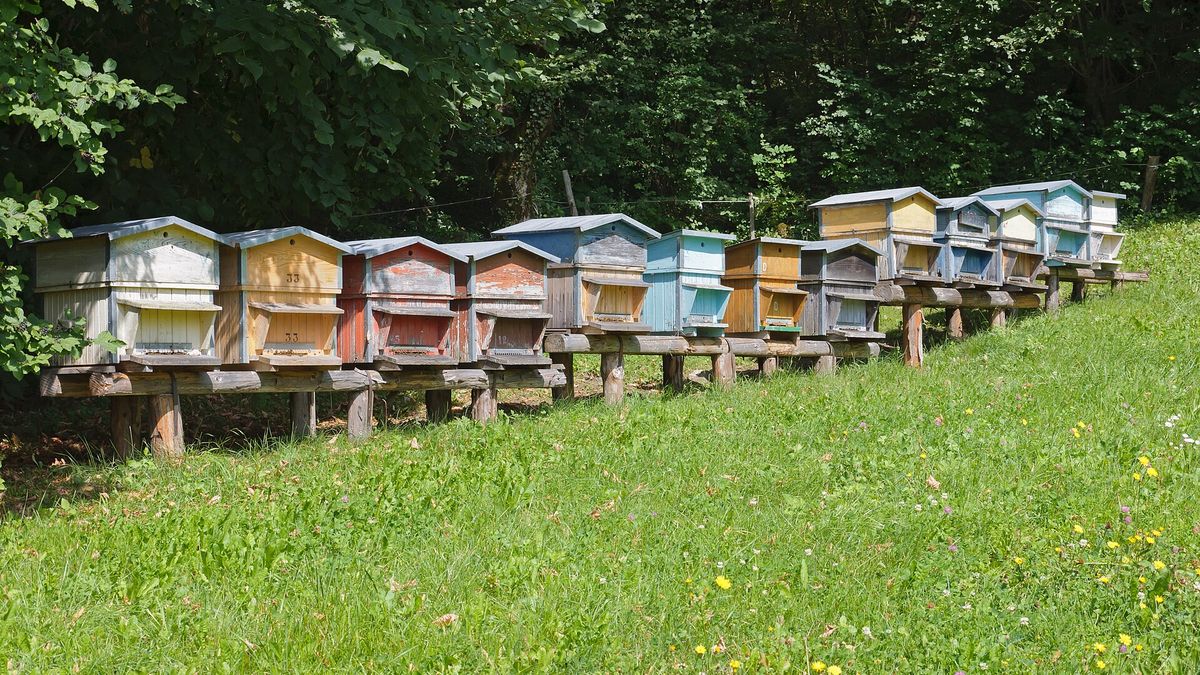
Photo: Ruches Haute-Savoie, by Myrabella, license CC BY-SA 3.0, via Wikimedia Commons. Cropped.