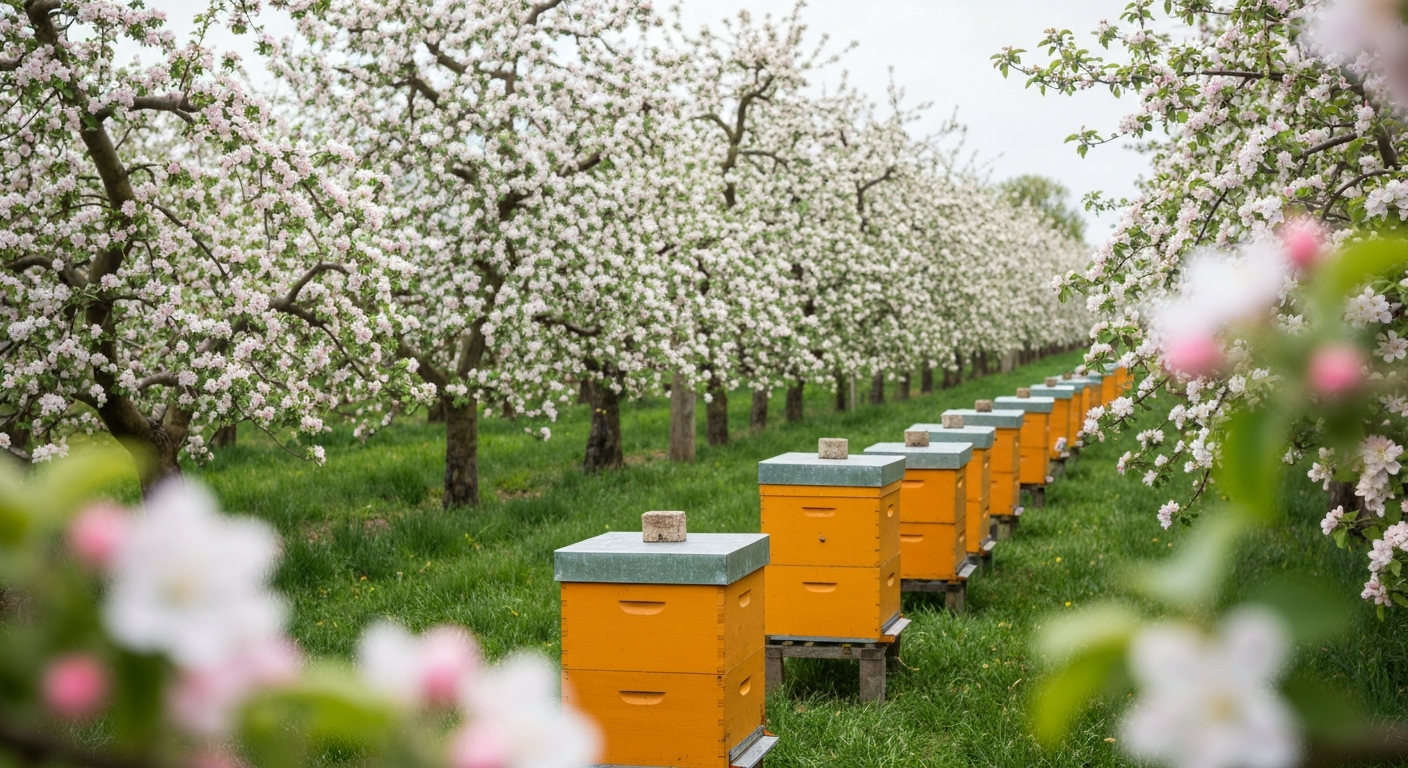
Commercial pollination is the part of beekeeping that most hobby beekeepers never think about until a neighbor with a strawberry farm asks if they can rent your hives for a few weeks. That first conversation sent me scrambling to figure out what was actually involved — what to charge, what I was responsible for, what happened if colonies came back weakened. It took a few seasons and two formal contracts before I felt like I understood the business side of it.
Pollination services are available to beekeepers at almost any scale, from a few hives helping a backyard orchard to dozens of colonies rented to a commercial berry operation. The economics are real: growers pay meaningful money for strong colonies delivered on schedule, and that income is independent of your honey crop.
How Pollination Contracts Work
At its core, a pollination contract is a service agreement. You, the beekeeper, agree to deliver a specified number of hives meeting a minimum strength standard to a grower’s property. The grower agrees to pay a fee per hive, typically with part upfront and the remainder on delivery or mid-season. You maintain the colonies during the pollination period, and you remove them at the end of bloom.
Key terms in any pollination contract should include:
- Colony strength standard: How many frames of bees and brood are required? Commercial growers typically want at least 8 frames of bees and 5 frames of brood. Define this in writing so there’s no dispute at delivery.
- Delivery and pickup dates: Growers need colonies present when the crop blooms, not two weeks after. Late delivery can mean a full season’s crop fails to set fruit.
- Payment schedule: Typically 50% on placement, 50% on pickup or mid-season. Get deposit upfront — it covers your mobilization cost and ensures the grower has skin in the game.
- Pesticide notification: Require written 48-hour advance notice before any pesticide application. Include language that transfers liability for colony losses to the grower if they spray without notice or use products harmful to bees.
- Colony loss provisions: Who is responsible if colonies die from disease or predation during placement? Spell it out. Generally, disease losses are your responsibility; pesticide losses are the grower’s if they failed to notify you.
- Water access: Bees need clean water nearby. Confirm the grower can provide it or that you’ll arrange it.
What to Charge
Pollination rates vary significantly by crop, region, and demand. In 2026, almonds in California have historically commanded the highest rates — $200–$225 per colony or more during peak demand — because the entire almond crop depends on honey bee pollination and the timing is non-negotiable. But almonds require commercial-scale operations and cross-country transport.
For small regional operations, more accessible crops include:
- Blueberries: $60–$120/hive, depending on region
- Apples and stone fruits: $60–$100/hive
- Pumpkins and squash: $50–$80/hive
- Strawberries: $65–$95/hive
- Sunflowers: $40–$70/hive (and your bees often get a great nectar flow from the placement)
Your local market determines your actual rate. Talk to other beekeepers in your region, contact your state’s beekeeping association, or ask your local extension office if they have crop-specific pollination rate surveys. Charging below market hurts everyone; charging above market costs you the contract.
Finding Pollination Clients
Small growers are everywhere. Orchards, berry farms, market gardens, and specialty crop operations near you may not even realize local bees are available for hire. Start by:
- Contacting your county’s farm bureau or agricultural extension office — they often facilitate grower-beekeeper connections.
- Joining your state’s beekeeping association. Many publish beekeeper directories that growers search when they need colonies.
- Talking to vendors at farmers markets. The apple orchard two stalls down may need bees and not know where to find them.
- Posting in local agricultural Facebook groups or NextDoor farm/garden groups.
The Practical Side of a Pollination Placement
Moving hives disrupts your colonies and takes planning. Close hive entrances at night when all foragers are inside. Transport in ventilated boxes or screened bottom boards to prevent overheating. Re-open at the placement site before dawn so foragers orient correctly to the new location.
During placement, inspect weekly. Colonies can crash from pesticide drift, robbing, or queen failure even in a short placement period. The grower needs strong colonies through the full bloom window — not just on delivery day.
At pickup, inspect again and document colony condition. If colonies came back significantly weaker, note it. This documentation matters if you need to negotiate future contracts or make warranty claims.
Common Mistakes in Pollination Contracts
- No written contract: Handshake deals end in disputes. Always get it in writing, even for a small neighbor placement.
- Underestimating transport costs: Fuel, equipment wear, and labor for moving hives add up. Factor it into your per-hive rate.
- Delivering weak colonies: Your reputation depends on delivering what you promised. Don’t place colonies that don’t meet strength specs — strengthen them first or decline the contract.
- Skipping pesticide clauses: One unnotified spray event can kill multiple colonies. The liability clause isn’t just legal cover — it’s leverage to ensure growers take bee safety seriously.
Pollination income is steady, predictable, and doesn’t depend on a good honey year. For beekeepers who can reliably field strong colonies on schedule, it’s one of the more sustainable revenue streams in small-scale apiculture. Start with one small grower, learn the logistics, and scale as your operation grows.